


Does Flexible Solar Cable Improve Installation Efficiency?
Construction speed and efficiency are crucial for the profitability of any photovoltaic (PV) power plant project. Every component, including the cabling, directly impacts the timeline. The Solar Cable acts as the power-transmitting artery of the entire system. In recent years, more flexible versions of the standard solar cable, often called flexible solar PV cable or easy-install PV cable, have become available. This guide explains the practical benefits, key considerations, and real-world impact of using such a high-flexibility solar cable to streamline your PV installation process, reduce labor costs, enhance long-term system safety, and ultimately boost solar cable installation efficiency.
Common Challenges in PV Cable Installation
The installation environment for a solar cable is often demanding.
- Cables must be routed through tight spaces: under rooftops, between mounting structures, within conduit, and across uneven terrain. This makes a PV cable for rooftops with specific handling characteristics essential.
- Traditional, less Flexible Cables have a large minimum solar cable bending radius, making them difficult to maneuver around sharp corners or through crowded cable trays.
- This rigidity requires more working space and often demands extra manpower to pull and position them without applying excessive force, which increases the risk of damaging the cable’s insulation or conductor strands during installation.
- In cold climates, standard cables can become even stiffer, further complicating the winter installation process and potentially leading to micro-fractures in the insulation if handled improperly.
Technical Advantages of Flexible Solar Cables
A flexible solar cable is engineered with specific materials and construction to address installation hurdles.
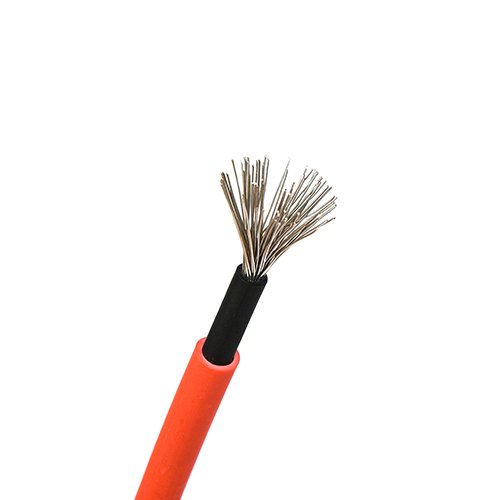
- It uses finely stranded copper conductors, which are far more flexible than the coarse stranded wires in standard cables. In addition, its insulation and sheath are made of special materials to ensure it performs as a durable outdoor solar cable.
- This design results in a significantly smaller bending radius, and reduced overall weight, making bundles easier to handle.
- The enhanced flexibility allows installers to easily install cables in narrow passages, thus reducing physical exertion.
- This inherent flexibility also helps the cable absorb and dissipate minor mechanical stress from vibration, thermal expansion, or accidental impacts during and after installation, contributing to longer service life.
Direct Impact on Construction Efficiency
Switching to a high-flexibility solar cable can lead to measurable gains on-site across various project scales.
- Faster Installation: Cabling progresses more smoothly with fewer stops for repositioning or struggling to make bends. This is especially critical in large-scale projects where cable runs are long and numerous.
- Reduced Labor Intensity: Tasks in tight or awkward spaces, such as under rooftop arrays, may require fewer workers. This directly cuts man-hour costs and minimizes the need for workers to be in strenuous positions for extended periods.
- Lower Re-work Risk: Easy handling and a smaller bend radius minimize the need for forced fits or improper routing that can later cause connection failures, hot spots, or maintenance issues.
- Enhanced Safety: Reduced pulling tension decreases the risk of immediate insulation damage or latent defects. It also lowers the chance of workplace injuries associated with manhandling heavy, stiff cable reels.
Advantages in Practical Applications
The advantages of flexible solar PV cable are not limited to theory; feedback from practical applications has consistently confirmed their efficiency advantages.
- In distributed commercial and residential rooftop projects, cabling efficiency has improved by 20-30%, primarily due to reduced time spent on each component string connection and combiner box cabling.
- For large ground-mounted substations, pre-installed cable management channels streamline the cabling process, shorten critical path time, and accelerate the transition from mechanical completion to electrical commissioning.
- Time savings directly translate into cost reductions, such as shorter elevator rental periods and fewer on-site construction days. This efficiency is a key competitive advantage for EPC contractors.
- Faster overall construction cycles enable earlier grid connection and revenue launch, thereby improving the project’s financial return on investment.
Key Selection Criteria Beyond Flexibility
While flexibility is certainly a significant advantage of solar cables, it is only one of the key factors in selecting durable and reliable solar cables. How to choose solar cable involves a holistic evaluation of various performance aspects.
- Prioritize Core Performance: The primary duty of any solar cable is to withstand environmental stress. Ensure it meets all relevant certifications (e.g., TUV, UL) for sunlight (UV) resistance, making it a truly UV-resistant PV cable, along with extreme temperature tolerance (-40°C to 90°C), flame retardancy, and resistance to abrasion.
- Balance with Durability: The cable must maintain sufficient mechanical strength, crush resistance, and cut-through protection for its intended environment. A durable outdoor solar cable should not have a jacket that is too soft, as it may be easily damaged during installation or by wildlife.
- Match to the Project: Use highly flexible types like a flexible DC solar cable for complex rooftop layouts, moving structures, or areas with dense cable routing. Standard flexibility may be perfectly adequate and more cost-effective for straightforward, open-rack ground-mounted systems.
- Verify specifications: Be sure to check the manufacturer’s datasheet to understand the certified minimum solar cable bending radius, conductor stranding grade, and sheath material composition. Do not judge the quality of solar cables solely based on subjective terms such as “soft” or “flexible”.

Practical Recommendations for Installers and Project Managers
To maximize the benefits and ensure a correct installation, follow these practical steps.
- Plan the Route: Before installation, map cable runs in detail to identify areas where high flexibility is most valuable. This allows for accurate cable length estimation and procurement.
- Train the Crew: Briefly instruct installation teams on the handling advantages of the flexible solar cable. Emphasize that while easier to pull, it still requires care and adherence to the specified bending radius to prevent internal conductor damage.
- Use Proper Tools: Even with flexible cables, employ suitable cable guides, rollers, and approved lubricants for long pulls to minimize friction and tension.
- Inspect Upon Delivery: Before starting work, check that the cable’s construction feels appropriately pliable and matches the product specifications. Look for fine stranding when cutting a sample end.
- Follow Standards Meticulously: Adhere strictly to the manufacturer’s recommended bending radius, pulling tension limits, and applicable national electrical codes. Never over-tighten cable ties, which can deform the jacket.
Long-Term System Benefits and Considerations
The advantages of a well-chosen flexible solar PV cable extend beyond just the installation phase.
- The reduced mechanical stress during installation leads to fewer latent defects, potentially lowering long-term failure rates and maintenance costs.
- Properly routed flexible cables are less likely to be under constant tension, which can improve performance over decades of thermal cycling.
- It is vital to ensure that any added flexibility does not come from inferior jacket compounds that may degrade faster under prolonged UV exposure. Always verify the long-term weathering certifications to ensure you are selecting a truly UV-resistant PV cable.
Conclusion
Flexible solar cable offers practical benefits, directly enhancing installation speed, worksite safety, and long-term system dependability across various PV projects. Its use simplifies cable handling, reducing labor demands—especially within tight or complicated installation areas. Success depends on choosing a solar cable that balances easy bending with proven endurance against weather and physical wear, a key part of how to choose solar cable. When project requirements and certified specifications guide the selection, developers and installers can shorten build time, control costs, and deploy a durable outdoor solar cable built for stable, long-running operation.