


How to Calculate Cable Size for Solar System?
Choosing the proper Solar Cable is crucial for a safe and working photovoltaic system. Incorrect solar cable sizing often causes significant energy loss, potential overheating, and system failure. Therefore, using a systematic photovoltaic cable calculation process is essential. This PV cable selection guide explains the basic steps for determining correct solar cable specifications, helping you achieve optimal performance for your solar panel wiring.
Understanding Solar Cables
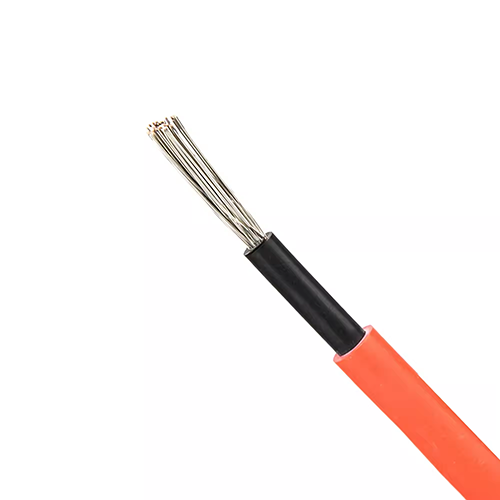
- Solar cables are wires specifically designed for PV systems. Their core function is to connect solar panels, inverters, charge controllers, and batteries.
- Unlike normal cable, they feature a special design that allows them to withstand harsh outdoor environments such as ultraviolet radiation, extreme temperatures, and humidity for extended periods. Their reinforced insulation layer ensures long-lasting reliability.
- The core function of this cable is to achieve efficient power transmission while minimizing losses. Therefore, selecting the correct solar cable size is fundamental to ensuring system safety and performance.
Why Correct Sizing is Significant
- Safety First: Using a solar cable that’s too small (insufficient wire gauge) can cause overheating. This creates a risk of fire and can damage your equipment. The very first step to ensuring safety is to calculate the proper size.
- Efficiency Priority: Solar cable voltage drop represents energy lost as heat, directly lowering system output and profitability.
- Investment Protection: Using the right solar cables prevents energy loss and stops equipment from being overloaded. This guarantees the system runs stably long-term and protects the value of your investment. Proper cable sizing is the essential foundation for system reliability.
Key Factors for Sizing Your Cables
- System Current: Calculations must use the maximum short-circuit current (Isc) to ensure the selected solar cable can withstand this current and avoid overheating.
- Allowable Voltage Drop: Limit total DC solar cable voltage drop to within 3% (ideally 1-2%), which often requires thicker cables.
- Laying Length: The actual path length must be measured, not the straight-line distance. Longer paths have higher resistance, thus requiring thicker cables to limit voltage drop.
- Installation Environment: High temperatures or dense laying will reduce current-carrying capacity, therefore, larger gauge cables should be used to compensate. When the ambient temperature exceeds 30°C, a larger gauge cable should generally be used.
Additional Critical Considerations
- Termination Compatibility: Ensure that the large-gauge cables you choose can be correctly connected to the terminals of the equipment (inverter, combiner box, battery), as some terminals have limitations on acceptable wire diameters.
- Cost vs. Performance Balance: Obviously, while thicker cables can reduce losses, they are more expensive and more difficult to bend and install. Therefore, the 3% voltage drop rule actually provides a practical balance between initial cost and long-term energy output benefits.
- Parallel vs. Series Configurations: Specifically, in parallel panel groups, current accumulates, significantly increasing the current in the main line. Therefore, this is a common reason why combiner boxes require large-gauge cables.
Calculation Methodology
- Know the AWG System: The solar DC cable AWG system defines sizes where smaller numbers indicate thicker wires with lower resistance(e.g., 6 AWG is much thicker than 10 AWG).
- Use the Voltage Drop Formula: For DC circuits, use the core formula: Voltage drop (V) = 2 × Length (ft) × Current (Isc, in amperes) × Resistance per ft (Ω/ft). Note that cable resistance values can be found in tables provided by the manufacturer.
- Calculate the Percentage: Voltage drop (%) = (Voltage drop / System voltage) × 100. It is important to ensure the result is within the target range of 1-3%. Furthermore, for systems with multiple panels connected in series, this calculation should use the total system voltage.
Step-by-Step Calculation Example
Let’s size a cable for a system with:
- Short-Circuit Current (Isc): 18A
- System Voltage: 24V
- One-Way Cable Length: 40 feet
- Target: Less than 3% voltage drop.
- Step 1: Find max allowed voltage drop in volts: 24V x 0.03 = 0.72V.
- Step 2: Calculate max allowed resistance per foot: R = 0.72V / (2 x 40 ft x 18A) = 0.0005 Ω/ft.
- Step 3: Select cable from a table. 10 AWG (0.00118 Ω/ft) is too high. 8 AWG (0.000739 Ω/ft) is still too high. 6 AWG (0.000395 Ω/ft) meets the requirement.
- Step 4: Verify: Voltage Drop = 2 x 40 x 18 x 0.000395 = 0.569V. Percentage = (0.569V / 24V) x 100 = 2.37% (Success!).
Common Cable Sizes and Applications
Different cable specifications perform optimally in different applications. The following table outlines common solar cable sizes and their typical uses:
| Cable Size (AWG) | Typical Application |
| 10-12 AWG | Typically used for short interconnections between solar panels in an array. These are often pre-attached to panels as leads. |
| 8-6 AWG | Common for the main DC run from a residential rooftop array to the inverter, especially for runs between 30 to 60 feet. |
| 4-2 AWG | Often used for battery bank connections and longer runs in commercial systems due to their high current-handling capacity. |
| 1/0-4/0 AWG | Reserved for large-scale battery systems and high-current commercial applications, such as the output from a central inverter. |
Practical Tips for Selection and Installation
- Apply Derating: In hot environments or conduit installations, select a cable gauge at least one size larger than the basic calculation indicates.
- Size for the Longest Run: Base your calculations on the system’s longest circuit, which experiences the greatest voltage drop. Correctly sizing this circuit inherently protects all shorter ones.
- Specify UV-Resistant Cable: Employ only cable specifically rated for outdoor, sunlight-resistant use in all DC wiring. Indoor-rated cable insulation deteriorates quickly when exposed to the elements.
- Adhere to Electrical Codes: Compliance with the National Electrical Code (NEC) and all local regulations is mandatory for safety, governing both wire ampacity and installation practices.
- Seek Expert Guidance: For any uncertainty, engage a qualified solar installer or electrician. Their expertise is crucial for complex systems and guaranteed code adherence.
- Plan for Expansion: If future system expansion is anticipated, consider proactively oversizing the main cable. This foresight avoids costly and disruptive replacements later.
Conclusion
Choosing the right cable size is essential for your solar system’s safety, efficiency, and durability. Calculate the appropriate gauge by considering peak current, acceptable voltage drop (aim for 1–3%), and total cable length. Always choose cable diameters suited to installation conditions, use approved materials, and follow electrical codes. When uncertain, seek professional advice to safeguard your investment and maintain reliable operation over time.