


2027 Copper Price Outlook: Why PV Cable Innovation Is the Key to Controlling Solar Project Costs
Industry peers involved in photovoltaic (PV) engineering and cable wholesaling know this all too well: the relentless surge in copper prices has severely squeezed profit margins for PV projects, creating a major headache for EPC cost control, wholesaler profitability, and procurement selection. Many are wondering: what is the outlook for copper prices in 2027? Will they fall back, or continue to skyrocket and remain at high levels? Leading investment banks and industry bodies offer a clear answer: in 2027, copper prices will not only avoid a decline but will hit new highs and continue to climb.
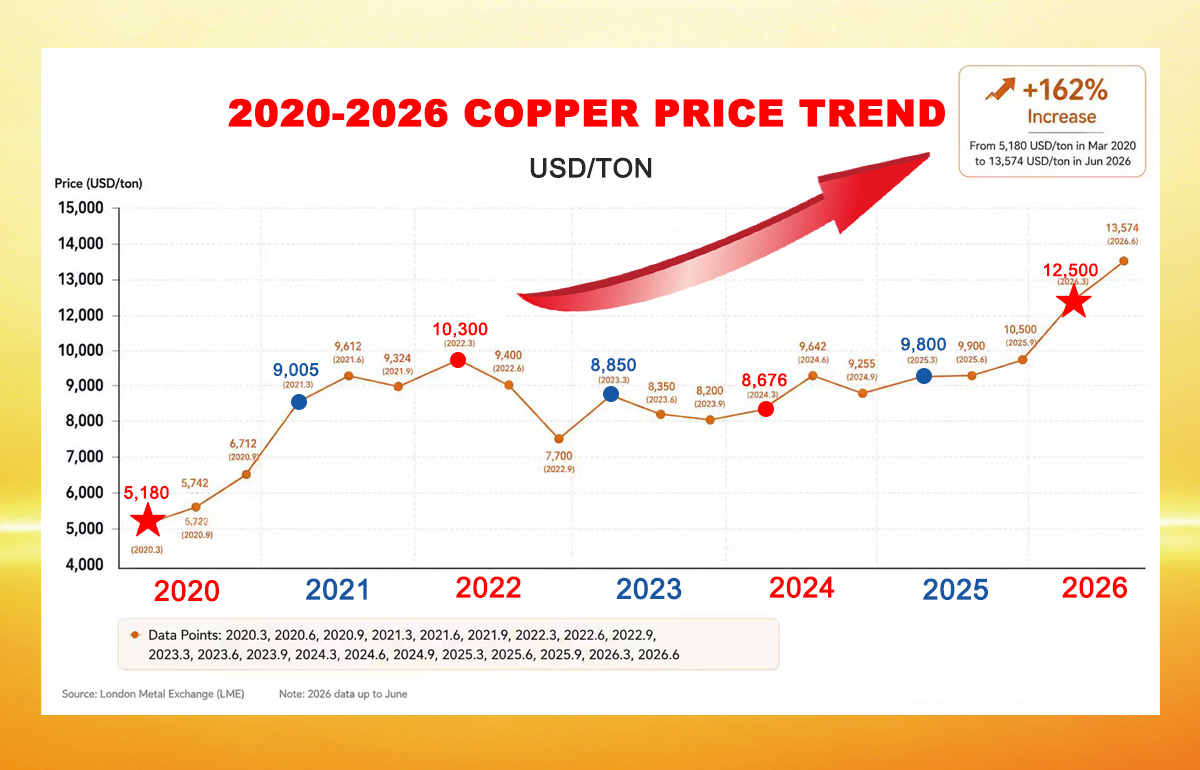
Authoritative institutions—including Morgan Stanley, Bank of America, and Goldman Sachs—unanimously predict that the global copper supply-demand gap will reach a 22-year high in 2027. Driven by insufficient growth in mining capacity and surging demand from the new energy and computing power sectors, average copper prices will remain high, marking the definitive start of a long-term “super-cycle” of rising prices. With a major price surge in 2027 all but certain, are your PV project cable costs spiraling out of control? Are you still relying on simply piling on more copper to ensure stability—thereby eating up the majority of your project’s profits? Or, in an effort to cut costs, are you opting for downgraded, cheap cables that suffer from constant issues like overheating, leakage, and premature aging? Amidst this era of skyrocketing copper prices, how can you select Pv Cables that balance low cost, high performance, and 25-year stability? Is there a solution that maintains cable performance and extends power plant lifespan while drastically slashing procurement costs?
This presents a dilemma for PV EPC contractors, project developers, procurement engineers, and wholesalers: traditional PV cables rely on “more copper and larger cross-sections” to ensure performance, but with copper prices soaring, project costs are spiraling out of control. Conversely, reducing copper content or downsizing specifications to cut costs leads to high line losses, severe overheating, and reduced lifespans—resulting in constant maintenance issues, damaged reputations, and eroded profits.
In reality, the industry landscape has shifted: the core competitiveness of future PV cables lies not in who uses the most copper, but in who can achieve the highest utilization rate and best cost-performance ratio for every gram of copper used. The era of mindlessly piling on copper is over; the industry’s new path forward lies in reducing costs through technology and boosting quality and efficiency.
01 The Invisible Lifeline of PV Plants: Cables Matter More Than You Think
When looking at photovoltaic (PV) projects, most people focus solely on module efficiency, inverter brands, and energy storage configurations, believing these are the keys to a plant’s profitability. However, seasoned engineering professionals know that PV cables are the “invisible blood vessels” of the power plant.
In a megawatt-scale PV plant, the transmission of electrical energy—from modules and combiner boxes to inverters and energy storage units—relies entirely on cables; large-scale projects often require tens or even hundreds of kilometers of wiring. If cable quality is inconsistent, the plant’s power generation efficiency and operational stability will suffer significantly, even if the modules and other equipment are top-tier.
Unlike ordinary cables, PV cables must withstand harsh outdoor conditions over a 25-year lifespan: constant sun exposure, UV degradation, extreme diurnal temperature fluctuations, wind, sand, salt spray, heavy rain, and high humidity. Any quality shortcoming will be vastly magnified over such a long period of operation.
Many procurement agents and wholesalers focus only on spot prices, seeking low-cost, high-volume deals. Yet, industry veterans understand that a cable’s true value isn’t found on the day of delivery, but in every moment of its 25 years of stable operation. Low-priced, downgraded cables may seem like a bargain initially, but they lead to overheating, tripped circuits, insulation aging, leakage-induced shutdowns, and frequent rewiring. The result is skyrocketing O&M costs, shrinking project returns, and damaged reputations—a classic case of being “penny-wise and pound-foolish.”
02 Huge Price Gaps for the Same 4mm² Cable? It’s All Down to Hidden Downgrading
Many PV procurement agents and wholesalers are puzzled: why do quotes from different manufacturers vary so drastically for PV cables with the exact same specifications—such as the standard 4mm² size?
Setting aside differences in brand, manufacturing processes, and supply chains, the core reason is that some manufacturers achieve lower prices through hidden downgrading: reducing the actual cross-sectional area of the conductor, decreasing the number of wire strands, lowering copper purity, and using inferior materials for insulation and sheathing. These low-cost cables are virtually indistinguishable from products meeting national standards in terms of appearance and markings, making them difficult for novices to identify; however, once installed and operational, they frequently cause problems:
- Insufficient copper in the conductor leads to high resistance and significant line losses, directly reducing the power plant’s electricity output;
- Severe heating during prolonged operation accelerates insulation aging, creating risks of current leakage, short circuits, and fire;
- Inferior sheath and insulation materials offer poor UV and weather resistance, cracking and aging within 3–5 years—far too short to support a power plant’s 25-year lifecycle.
In short: the pennies saved per meter during procurement inevitably translate into high O&M costs and project risks later on. For wholesalers, this means being plagued by after-sales issues, losing customers, and destroying their long-term reputation.
03 Reject Polarization! Break the Industry Myth That “Good Performance = More Copper”
Faced with soaring copper prices, the industry is currently trapped in two misconceptions—both of which are pain points affecting profitability for all practitioners:
Either stubbornly sticking to traditional designs that rely on massive amounts of copper to ensure performance—resulting in high project costs and a lack of price competitiveness—or maliciously cutting specifications to lower costs and grab market share, thereby sacrificing product reliability and creating engineering hazards.
Both approaches are confined to the outdated mindset that “more copper equals better performance.” However, looking at the development of the new energy industry, technological evolution has never been about simply piling on materials: modules boost efficiency through technology, inverters improve performance through optimization, and new energy vehicles reduce energy consumption through lightweighting.
The same applies to photovoltaic (PV) cables: a high-quality product isn’t about “using more copper,” but rather “using copper effectively and precisely.” The optimal solution for today’s era of high copper prices is to improve copper utilization through technological optimization—all while ensuring compliance, maintaining performance, and preserving longevity.
04 VAZPO’s Technological Breakthrough: Reducing Copper Consumption Without Sacrificing Performance; Controlling Costs Without Compromising Quality
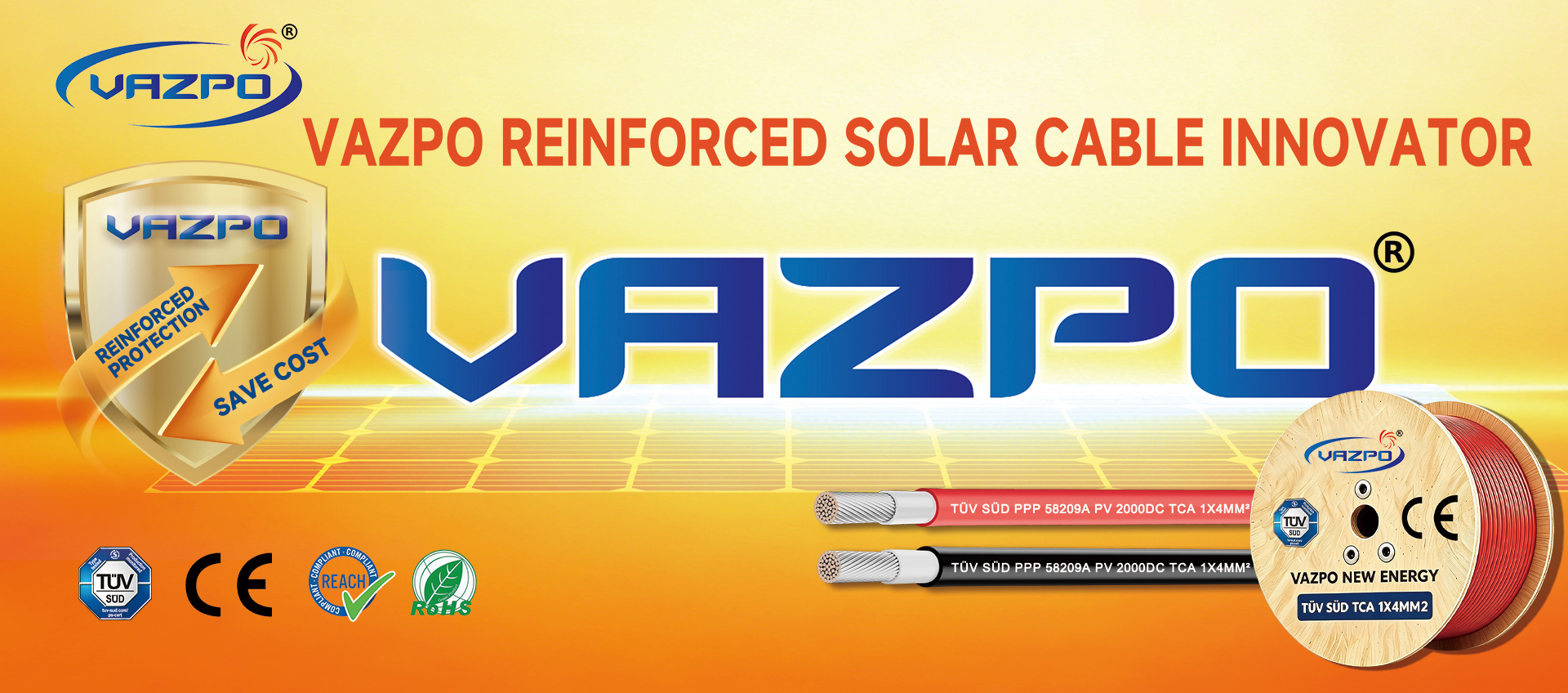
To address the industry’s dilemma—where “more copper is expensive” and “less copper results in poor quality”—VAZPO has focused deeply on PV cable R&D, launching a reinforced, tinned copper-based PV cable. We avoid both the wasteful over-use of copper and the cutting of corners. Through core technologies—structural optimization, material upgrades, and enhanced protection—we perfectly balance the four key demands of low cost, high performance, longevity, and high safety, delivering cost-effective solutions for EPC projects, PV installations, and wholesale channels.
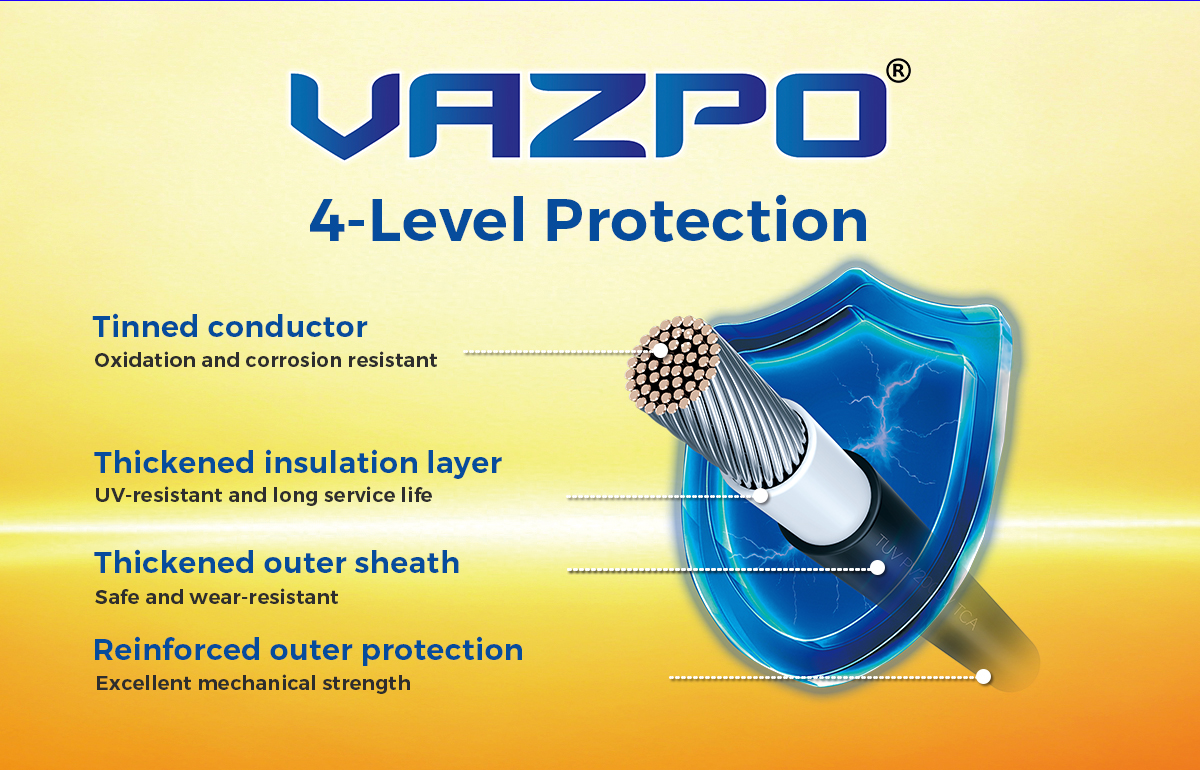
Four-layer reinforced protection ensures the stable operation of power plants for 25 years.
The core value of a PV cable lies in its ability to withstand complex outdoor conditions over a 25-year lifespan while ensuring stable power transmission. VAZPO’s four-layer protective structure addresses issues such as aging, corrosion, damage, and leakage at the source:
Layer 1: Tinned Conductor – Significantly enhances resistance to oxidation and salt-spray corrosion, preventing conductor oxidation and resistance spikes during long-term operation, thereby ensuring consistent transmission performance;
Layer 2: Thickened Insulation – Upgrades voltage withstand capabilities, effectively resisting voltage surges and reducing the risk of insulation aging or breakdown, making it suitable for extreme temperature fluctuations;
Layer 3: Thickened Sheath – Strengthens abrasion, tear, and UV resistance, withstanding intense sun exposure, wind, sand, and heavy rain without cracking or peeling;
Layer 4: Integrated Reinforced Protection – Enhances mechanical structural strength, making the cable suitable for harsh outdoor environments—such as high heat, high humidity, and extreme diurnal temperature swings—and comprehensively boosting product durability.
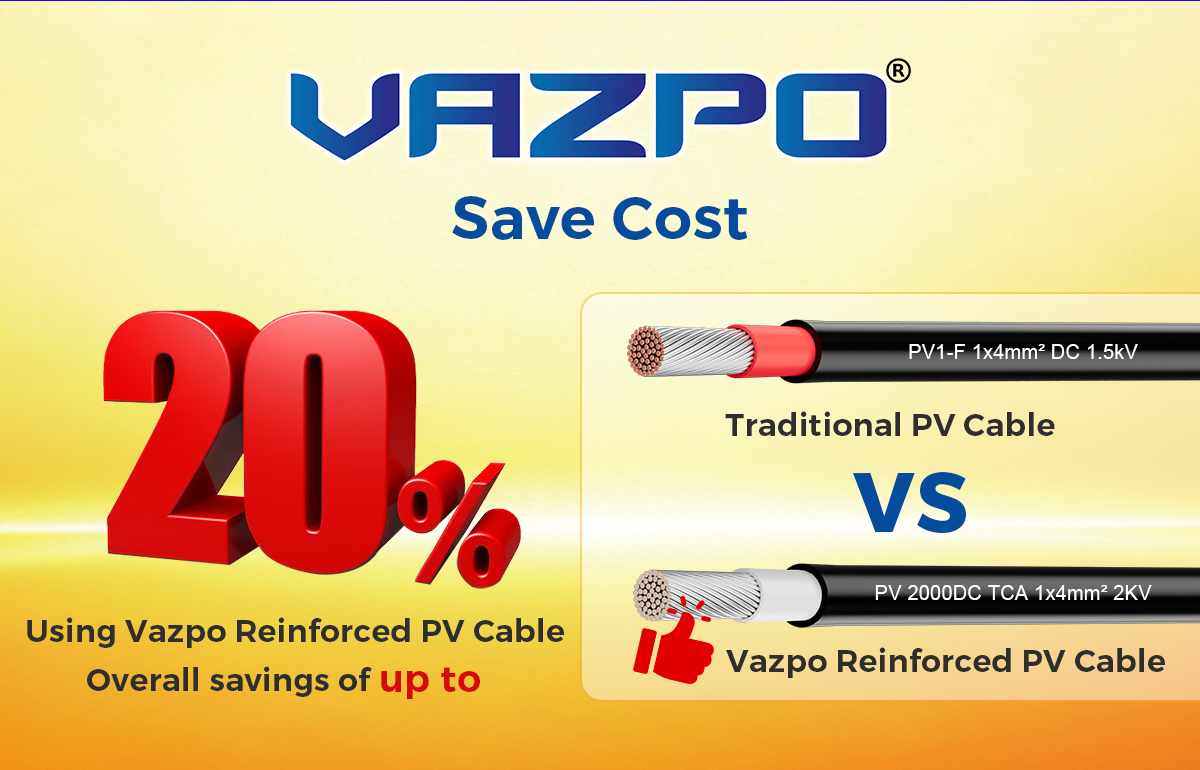
Low loss, high current-carrying capacity! Less copper, yet standards are maintained; lower costs, yet quality remains high.
A key concern for many is whether conductivity suffers when copper usage is optimized. The answer is no; in fact, performance exceeds that of traditional products meeting national standards.
Take the common 4mm² PV cable as an example: while traditional products meeting national standards have a resistance of approximately 5.09 Ω/km, VAZPO—through refined conductor structural optimization—maintains resistance between 4.98 and 5.01 Ω/km while reasonably reducing copper consumption. This results in superior conductivity and lower line losses. Our mainstream 6mm² product boasts a resistance as low as 3.28 Ω/km, offering higher current-carrying capacity and reduced transmission loss, ultimately leading to greater power generation revenue over the long term. We truly achieve a balance: reducing redundant copper, lowering procurement costs, improving transmission efficiency, and ensuring long-term quality. Comprehensive international certifications and verifiable, robust performance
Reliable qualifications are the baseline for project selection and bulk procurement. VAZPO’s enhanced-protection PV cables have secured multiple authoritative international certifications—including TÜV, RoHS, REACH, and CE—and passed 14 rigorous performance tests under demanding conditions. They fully meet quality standards and are suitable for diverse PV projects worldwide.
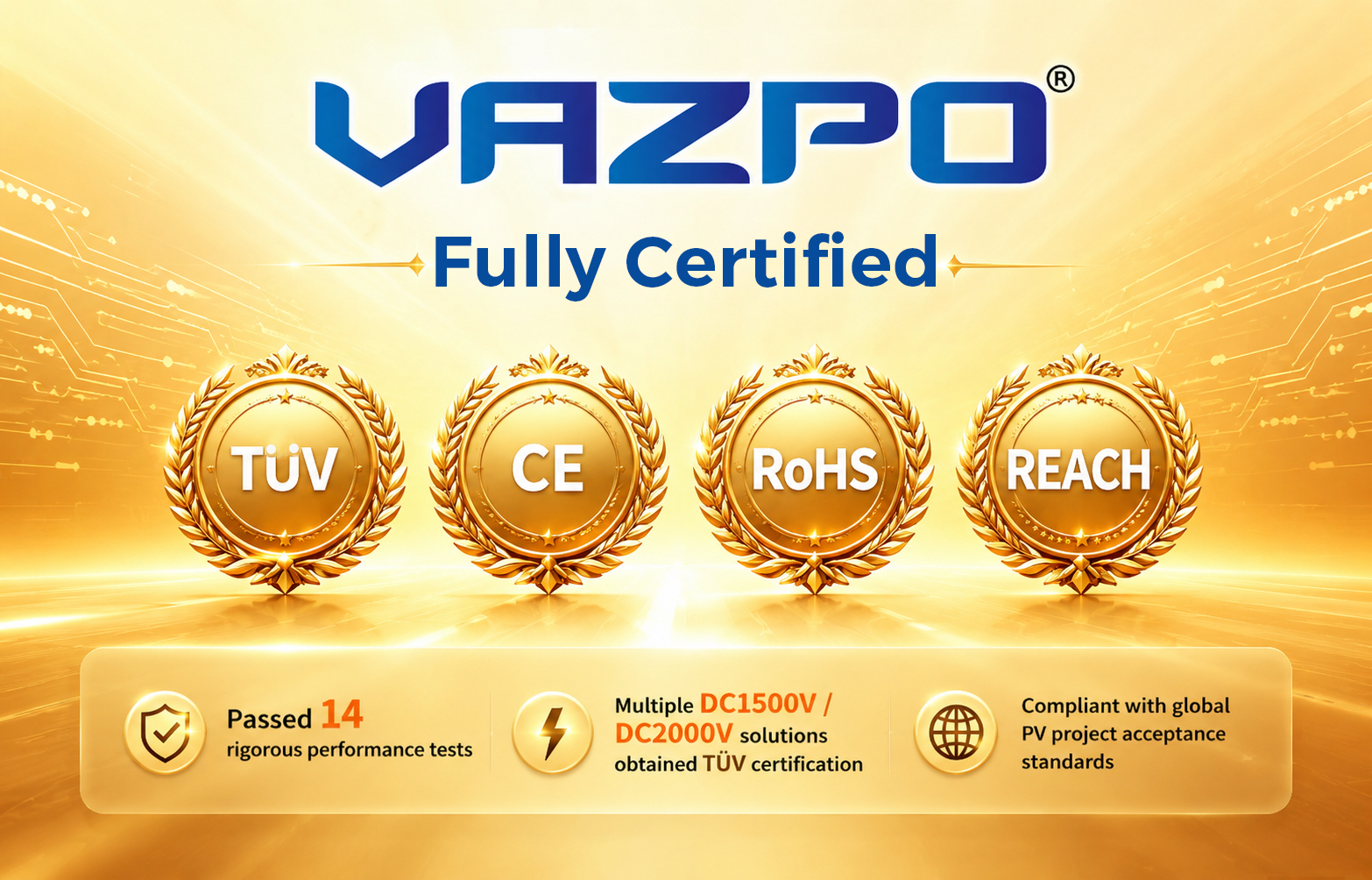
Notably, the DC2000V series (with copper content options of 35%, 60%, and 70%) and the DC1500V series (60% copper content) have successfully passed TÜV certification. Their technical compliance and product reliability are fully verifiable, effectively eliminating concerns regarding project acceptance and supply chain qualifications.
05 Proven real-world application: Cost reduction and efficiency gains in large-scale projects
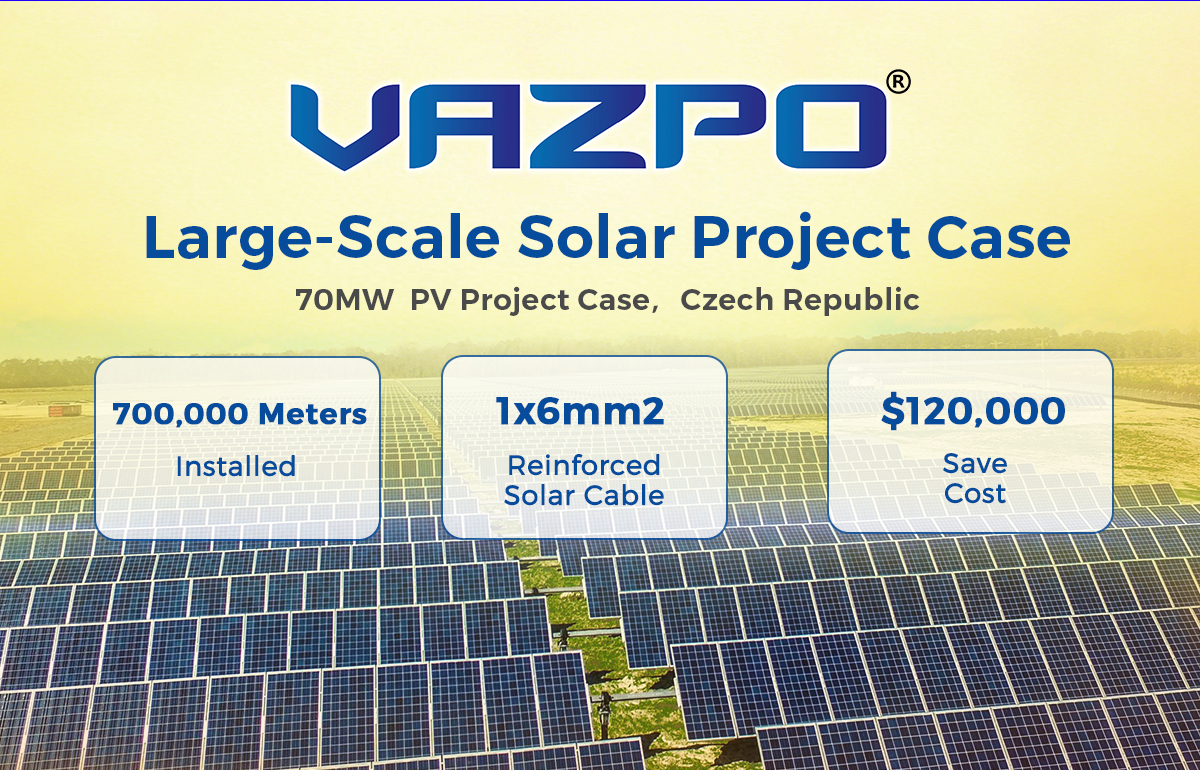
Real-world performance is the ultimate test of technology. VAZPO PV cables have been successfully deployed in a 70MW large-scale PV power plant project in the Czech Republic, involving the installation of 700,000 meters of 1×6mm² enhanced-protection PV cable.
The project operated stably throughout, with no issues regarding overheating, excessive power loss, or aging-related failures. It also achieved significant cost savings: approximately $0.17 saved per meter of cable, totaling over $120,000 in savings for the entire project.
This case study demonstrates that reducing costs and improving quality in PV projects are not mutually exclusive; technological innovation enables a win-win scenario of low costs, high reliability, and high returns. For contractors, this means lower total project costs and a higher probability of winning bids; for wholesalers, it means products with excellent cost-performance ratios that facilitate customer acquisition, offer better profit margins, and require less after-sales effort.
06 Stable delivery and end-to-end quality control to meet global bulk project demands
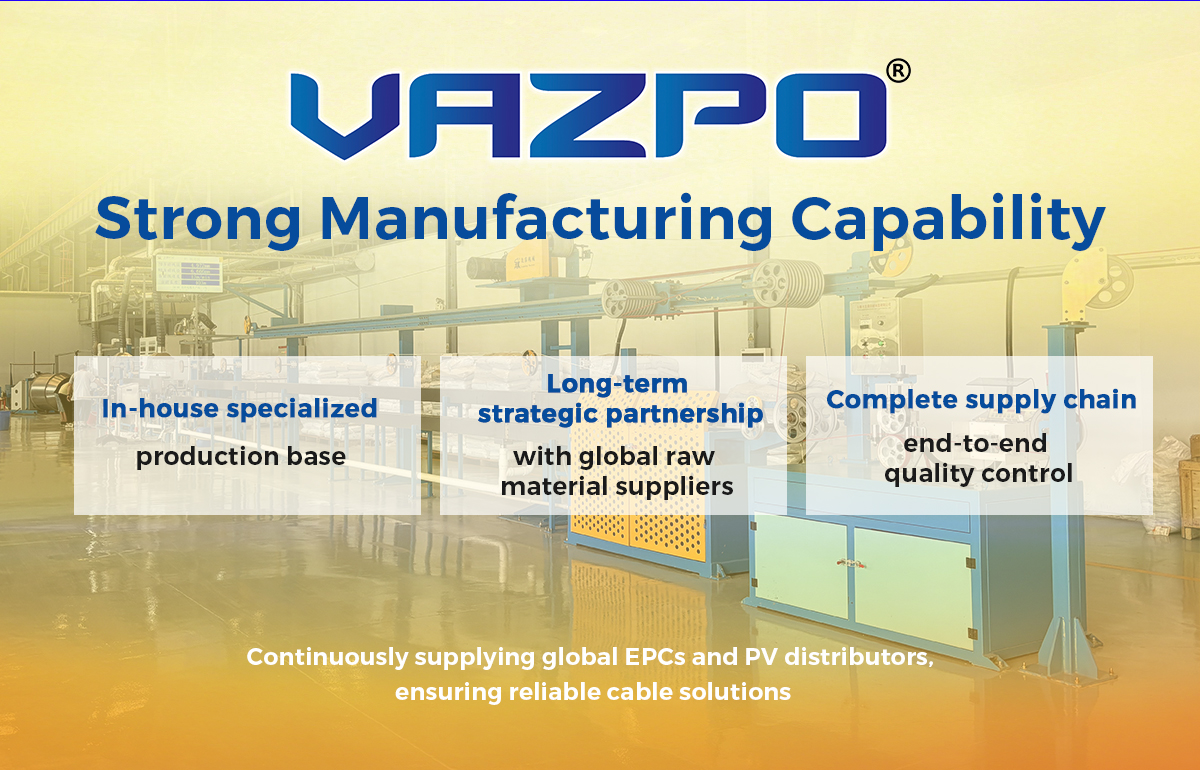
Beyond robust product performance, VAZPO boasts professional manufacturing facilities, a comprehensive supply chain, and rigorous quality control processes, supported by long-term strategic partnerships with renowned global raw material suppliers. Strict controls are enforced at every stage—from raw material selection, automated production, and in-process inspections to final product dispatch—eliminating defective or non-standard items and ensuring consistent performance and standardized specifications for every batch. We are fully equipped to meet volume supply demands for residential, C&I (commercial and industrial), and utility-scale ground-mounted PV plants. With stable delivery and reliable lead times, we ensure smooth grid connection for projects and rapid inventory deployment for wholesalers.
Conclusion
High copper prices have become the new normal, and the PV cable industry has long since moved past the crude era of simply “piling on copper” to boost performance. Future market competition will be a comprehensive contest involving technology, cost-effectiveness, stability, and long-term reliability.
For PV engineers, EPC contractors, and wholesalers, the most cost-effective cable isn’t the one with the lowest purchase price; it is a product that delivers 25 years of zero-failure operation, low power loss, high asset value retention, and strong profitability. A single instance of downtime or rework caused by inferior cables results in losses that go far beyond monetary costs—damaging your reputation and costing you customers.
VAZPO’s enhanced-protection PV cables redefine the standards for cost and quality in the industry. By optimizing performance through advanced technology rather than simply adding more copper, these cables achieve lower line losses, superior stability, and extended service life. This helps PV projects reduce costs and boost efficiency, while enabling wholesalers to enhance their core competitiveness and expand profit margins.
Please feel free to contact us for samples, technical specifications, bulk quotes, or customized project solutions. We look forward to providing you with a tailored PV cable solution!