


Why Choose H1Z2Z2-K Solar Cable?
The Solar Cable, a part that is sometimes disregarded, is essential to any secure and efficient solar power system. Selecting the wrong cable might result in excessive maintenance costs, safety risks, and energy loss.
The H1Z2Z2-K solar cable has emerged as the go-to option for contemporary photovoltaic systems, and this guide explains why. Its design, technological benefits, uses, and comparison with conventional Solar Cables like PV1-F will all be covered.
Understanding the H1Z2Z2-K Solar Cable Design and Construction
The H1Z2Z2-K solar cable is engineered for demanding photovoltaic environments, where long-term safety, durability, and efficiency are critical.
- Voltage and Current Handling
The H1Z2Z2-K solar cable is rated for 1.5 kV DC, making it suitable for connecting solar modules and inverters in modern PV systems. Its high current-carrying capacity helps minimize power loss over long cable runs.
- Advanced Material Composition
The insulation is made of cross-linked polyolefin (XLPO), offering excellent thermal stability and electrical performance. The outer sheath is halogen-free, improving safety in case of fire.
- Designed for Outdoor Use
With outstanding resistance to UV radiation, ozone, extreme temperatures, and abrasion, the H1Z2Z2-K solar cable is designed to operate reliably for decades in harsh outdoor conditions.
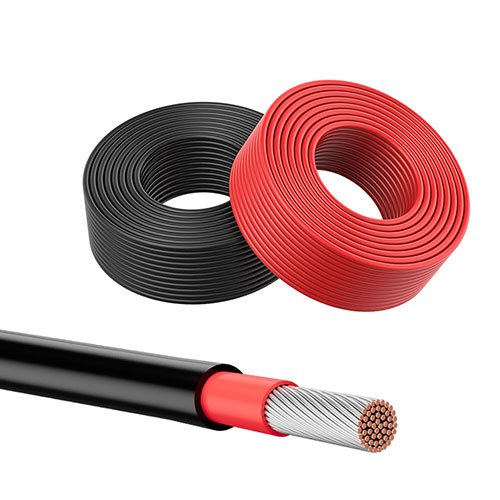
Key Advantages of H1Z2Z2-K Solar Cable in Photovoltaic Systems
Choosing the H1Z2Z2-K solar cable brings measurable benefits across all types of solar installations.
- Improved Fire Safety
Materials that are flame-retardant and halogen-free stop flames from spreading and lower emissions of harmful smoke.
- Long-Term Dependability
Over the course of the system’s lifespan, excellent environmental resistance guarantees steady performance and lowers maintenance and replacement expenses.
- Compliance with International Standards
Consistent quality and performance are guaranteed because the cable conforms with EN 50618, the accepted European standard for DC photovoltaic cables.
All-Inclusive Uses for Solar Installations
The H1Z2Z2-K solar cable’s adaptability makes it suitable for application across the photovoltaic sector.
- Rooftop Systems for Homes
It transfers power from solar panels to the inverter safely, is adaptable, long-lasting, and simple to install.
- PV Projects for Commercial and Industrial Use
For big solar arrays with larger power requirements, its high voltage rating and thermal performance are crucial.
- Utility-Scale Installations and Solar Farms
It is perfect for reducing operational risks in large-scale solar projects because to its proven long-term durability and weather tolerance.
H1Z2Z2-K vs. PV1-F Solar Cable: Thicker Insulation and Sheath Advantages
Compared with the traditional PV1-F solar cable, the H1Z2Z2-K solar cable features a thicker insulation layer and reinforced outer sheath, providing higher safety margins and longer service life.
Increased thickness of XLPO material is used to optimize the insulation of H1Z2Z2-K solar cable, improving dielectric strength and resistance to long-term DC voltage stress. This greatly lowers the possibility of electrical failure, insulation aging, or cracking in high-temperature and high-irradiation environments.
Additionally, the outer sheath of H1Z2Z2-K solar cable is thicker and stronger than that of PV1-F cable, offering superior resistance to mechanical wear, impact, environmental stress, and UV exposure. These structural enhancements make H1Z2Z2-K more suitable for modern PV systems with higher performance and safety requirements.
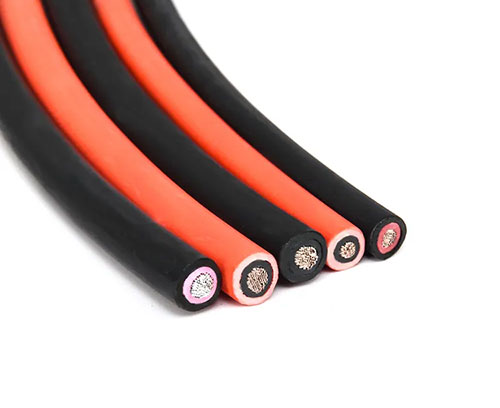
Structural Comparison Between H1Z2Z2-K and PV1-F Solar Cables
|
Feature |
H1Z2Z2-K Solar Cable |
PV1-F Solar Cable |
|
Insulation Thickness |
Thicker insulation design for enhanced dielectric strength |
Standard insulation thickness |
|
Outer Sheath Thickness |
Reinforced, thicker halogen-free sheath |
Standard sheath thickness |
|
Voltage Resistance |
DC1.5kV |
DC1.5kV |
|
Electrical Performance |
Designed for modern photovoltaic system requirements |
Suitable for traditional photovoltaic applications |
|
Environmental Resistance |
Enhanced UV, weather, and aging resistance |
Standard UV and weather resistance |
|
Application Scope |
New-generation and high-performance PV systems |
Conventional PV systems |
Technical Performance Advantages in Real-World Conditions
- High Energy Efficiency
Low electrical resistance maximizes power transfer from solar panels to inverters.
- Thermal Stability
XLPO insulation maintains performance across a wide temperature range, preventing insulation breakdown.
- Mechanical Strength
The robust sheath protects against vibration, crushing, and mechanical impact commonly encountered in solar installations.
Installation and Maintenance Best Practices
Proper installation is essential to achieve the full performance of the H1Z2Z2-K solar cable.
Store cables in a dry, shaded area before installation.
Avoid sharp bends and abrasion points during routing.
Use UV-resistant cable ties and compatible connectors.
Conduct regular inspections to detect sheath damage or loose connections early.
Compliance with International Standards
The H1Z2Z2-K solar cable is designed to meet globally recognized standards:
- EN 50618 – Dc Cables for photovoltaic systems
- IEC 62930 – International requirements for PV cable performance
- Low Smoke and Fire Safety Standards – Supporting safer building and infrastructure installations
Using certified H1Z2Z2-K solar cable simplifies project approval, inspection, and insurance processes.
Conclusion
The H1Z2Z2-K solar cable is a reliable and future-ready solution for photovoltaic systems of all sizes. With thicker insulation and sheath compared to PV1-F, excellent fire resistance, and superior environmental durability, it ensures safe and efficient power transmission between solar panels and inverters.
By selecting certified H1Z2Z2-K solar cable and following proper installation practices, you protect your investment and secure long-term system performance.