


Solar Cable Manufacturers Development and Trends in 2025
Industry Development Overview
In 2025, the global Solar Cable industry will usher in a period of rapid development. The rapid growth of photovoltaic installed capacity, coupled with the rising demand for advanced material applications, digital monitoring technology and green solutions, has driven cable manufacturers to accelerate innovation and expansion. According to forecasts, the global market will maintain a compound annual growth rate of 8.1% between 2024 and 2034, with Asia Pacific, North America and Europe as the main growth engines. The Asia-Pacific region has the fastest growth due to large-scale investments in China, India and other countries; North America has the largest market size, leading in technological innovation and policy support; Europe has maintained steady development in sustainable and intelligent manufacturing. In terms of subdivision, high-performance wires such as THHN cables are in increasing demand in residential and commercial photovoltaic projects, and net zero goals and IoT applications have become new market drivers.
Technological Innovation and Intelligent Trends
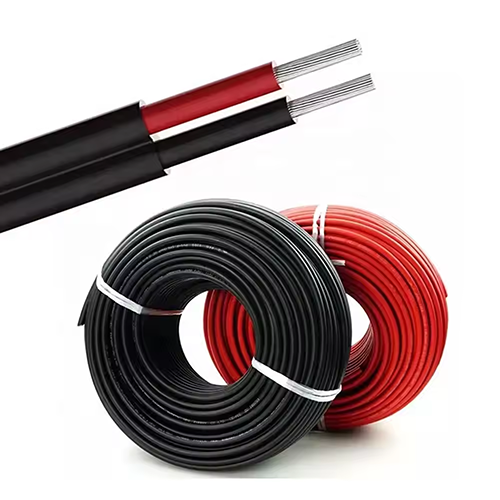
The upgrade of materials and design is the core direction of industry innovation. High-purity copper and aluminum alloy conductors perform well in conductivity and corrosion resistance, while cross-linked polyethylene and halogen-free low-smoke materials are widely used in insulation and sheathing, which not only have high temperature resistance, fire resistance and environmental protection properties, but also significantly extend the life of cables to more than 25 years. At the same time, the lightweight flexible design and optimized geometric structure improve installation efficiency and current carrying capacity, and reduce overall engineering costs.
The introduction of digital technology has become another highlight. Smart cables integrate IoT sensors to achieve real-time monitoring of current, voltage, and temperature, and are remotely managed through cloud platforms and dashboards. Combined with digital twins and AI predictive maintenance technology, these intelligent systems can effectively reduce downtime, optimize operation and maintenance strategies, and significantly improve the overall efficiency and reliability of photovoltaic systems.
Regional Market and Demand Characteristics
The global regional markets show obvious differences. The Asia-Pacific region leads in production capacity and project scale, while North America relies on technology research and development and policy incentives to form a huge market capacity. Europe drives demand for high-end products with green manufacturing and strict standards, while Latin America, the Middle East and Africa, as emerging markets, bring a lot of opportunities for infrastructure investment.
The needs of different industries are also changing. In addition to energy, automotive, medical, telecommunications and smart city projects have put forward more requirements for high-performance cables, and the advancement of Industry 4.0 has further promoted the popularization of intelligent cables.
Compliance, Environmental Protection and Competitive Landscape
As global safety and environmental protection requirements increase, Solar Cables need to meet multiple standards such as UL, CE, IEC, VDE, and RoHS. The standards in the North American and European markets are particularly stringent, and high requirements are placed on fire resistance, pressure resistance, and weather resistance. At the same time, sustainable development has become the focus of competition. Green materials such as recycled copper, bio-based polymers, and halogen-free insulation materials are widely used. Certifications such as ISO 14001, CPR, and EPEAT have gradually become important indicators for purchasing decisions. If companies can take the lead in achieving green compliance, they will have an advantage in international market competition.

Future Outlook
In the next decade, solar cables will develop in the direction of higher power, longer life, and more intelligence. Intelligent monitoring and rapid maintenance will become industry standard configurations, and green and low-carbon supply chains will become competitive barriers. For manufacturers, continued investment in new material research and development and digital technology will not only meet increasingly stringent market requirements, but will also seize the initiative for future growth.