


How to Choose the Right Cable for Large-Scale Ground-Based Photovoltaic Power Plants?
As the global energy transition accelerates, utility-scale ground-mounted solar farms have become a key force in renewable power generation. Compared to rooftop systems, these large-scale installations require higher capacity, longer operational lifespans, and superior reliability.
In a photovoltaic system, cables are the “nervous system” connecting modules, combiner boxes, inverters, and grid connection points. Their performance directly impacts the system’s power generation efficiency and lifespan. Improper cable selection can lead to power loss, insulation degradation, and even downtime.
So, how should cables be selected scientifically for large-scale ground-based photovoltaic power plants?
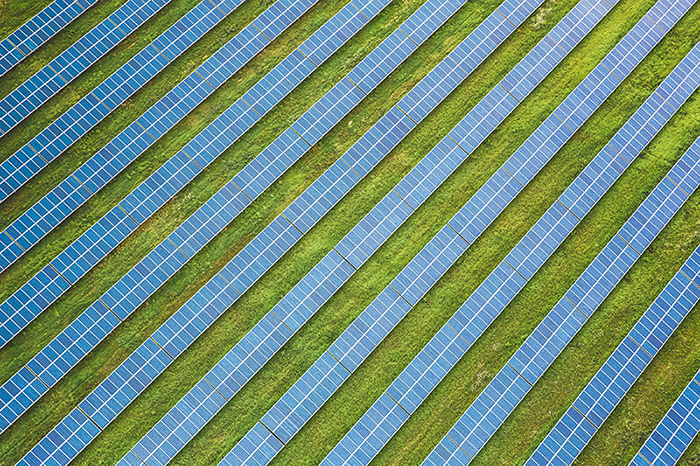
1. Special Cable Requirements for Large-Scale Ground-Based Photovoltaic Power Plants
Due to the complex operating environment and the need to operate for over 25 years, cable selection for large-scale photovoltaic power plants requires the following considerations:
- High Voltage Rating and High Current Carrying Capacity
Due to the large system capacity, cables must withstand higher DC voltages (typically 1500V DC) and larger AC currents to ensure safe operation.
- High Temperature, UV, and Weather Resistance
Cables are exposed to sunlight for extended periods and must withstand strong UV rays, high and low temperatures, rain, and snow.
- Resistant to mechanical stress
During installation, the cable may be subjected to mechanical forces such as long-distance dragging, soil covering, and construction compaction.
- Rodent-proof, insect-proof, and moisture-proof
Ground-mounted power stations located far from urban areas are often exposed to rodent bites, insect damage, and humid underground environments.
- Long life and low maintenance costs
The target operating life is 25-30 years, reducing maintenance costs and downtime losses caused by cable replacement.
2. Main Types and Application Scenarios of Photovoltaic Cables
(1) Dc Cable
- Common standards: PV1-F (TÜV 2 PfG 1169/08.2007), EN50618 (H1Z2Z2-K)
- Used for DC connection between components and combiner box, combiner box and inverter
Features: high voltage resistance, UV resistance, acid and alkali resistance, wear resistance
(2) AC cable
- Common models: YJV, YJLV (cross-linked polyethylene insulated Power Cable)
- Used between inverter and booster station, booster station and grid connection point
- Features: high insulation grade, good mechanical strength
(3) Aluminum core vs. Copper core selection
- Copper core: excellent conductivity and good flexibility, but relatively high price and heavy weight
- Aluminum core (aluminum alloy conductor): light weight, high cost performance, suitable for long-distance laying and cost-sensitive projects
- Many large-scale plants use aluminum-core cables for the AC side to reduce total investment
(4) Special-Purpose Cables
- Anti-salt-mist cables (for coastal PV plants)
- Rodent- and termite-resistant cables (for wild/remote environments)
- Fire-resistant or low-smoke halogen-free cables (for higher safety requirements)
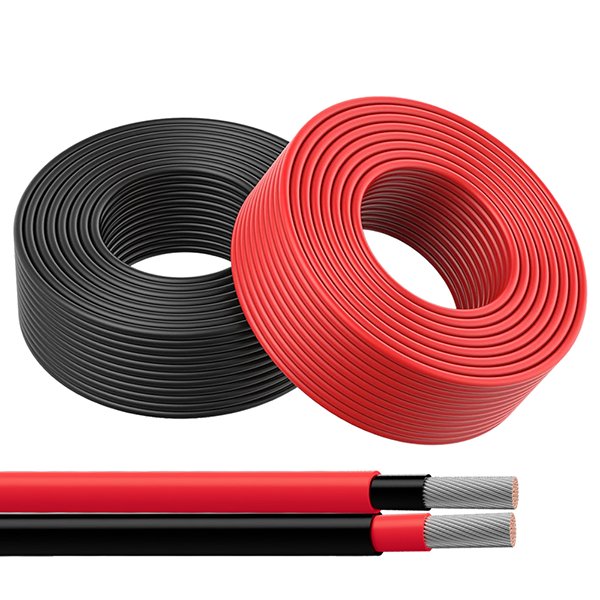
3. Analysis of Key Selection Indicators
- Rated voltage and cross-sectional area
The cross-sectional area needs to be calculated based on the system capacity, voltage level, line length and allowable voltage drop.
For example, in a 1500V DC system, it is necessary to ensure that the voltage drop at the maximum power point does not exceed the specified range.
- Insulation and Jacket Materials
XLPO (cross-linked polyolefin): High-temperature resistance (125°C), UV resistance, and excellent mechanical properties
PVC: Low cost, but weaker weather and temperature resistance
EVA:low-smoke, halogen-free materials: Environmentally friendly and fire-resistant
- Temperature Range and Current Capacity
Ensure long-term stable operation within the -40°C to +90°C (even 125°C) range, with sufficient current capacity margin.
- Standards and Certifications
Preferably select products with international certifications such as TÜV, IEC, UL, and CE to ensure compliance with overseas project requirements.
- Durability Testing
Includes test data for UV aging, salt spray corrosion, abrasion resistance, and water resistance.
4. Laying and Installation Recommendations
- Laying Method Options:
Underground (low cost but requires moisture and rodent protection), Overhead (easy maintenance but requires wind and lightning protection), Cable Trench (high safety but high investment)
- Construction Precautions:
- Avoid cables from coming into direct contact with hot metal surfaces
- Control the bend radius (generally no less than 6-8 times the cable’s outer diameter)
- Allow length margin for thermal expansion and contraction
- Use compatible waterproof and UV-resistant connectors
5. Common Selection Mistakes and Case Studies
- Small cross-sectional area:Cable overheating and increased power loss
- Using ordinary power cables instead of photovoltaic cables :Rapid insulation aging and increased risk of short circuits
- Improper aluminum core connector handling :High contact resistance, heating, or even burning
- Inadequate construction protection:Early failures due to squeezing and rodent bites during earthwork
6. Cost and Lifecycle Considerations
Although high-quality Solar Cables require a higher initial investment, over a 25-year operating lifecycle, they can significantly reduce:
- Downtime and maintenance costs
- Power loss due to energy loss
- Compensation risks caused by accidents
According to industry data, cable costs account for less than 5% of the total investment in a PV power plant, but their performance impacts over 20% of the economic viability over the entire lifecycle.
7. Conclusion and Procurement Recommendations
- Choose the Right Supplier: Select manufacturers with international certifications, stable delivery capabilities, and long-term export experience.
- Tailor to project conditions:Select materials and structures tailored to environments such as high temperature, salt spray, dust, and humidity.
We specialize in the research and development and production of solar cables. Our products have been exported to over 80 countries across Europe, the Middle East, Southeast Asia, and Africa. We offer a variety of customized solutions, including tinned copper core, aluminum alloy solar cables, rodent- and termite-resistant cables, and salt spray-resistant cables.
If you are selecting cables for a large-scale ground-mounted PV power plant, please contact us for technical support and a custom quote.