


Current Status and Future Outlook of Offshore Solar Power
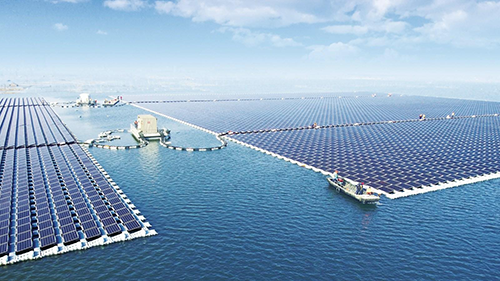
At present, the global energy transformation is accelerating, and renewable energy is increasingly becoming the core driving force. In this wave, offshore solar energy has emerged as an emerging and highly promising supplementary method. For EPC general contractors, system integrators and various purchasers, understanding the unique value of offshore photovoltaics and its demand for high-performance cables is the key to seizing future market opportunities.
Current status of offshore solar energy
At present, many countries and regions around the world have taken the lead in exploring offshore solar energy projects, such as the “Zonnebaars” project in the Netherlands, the “Yamakura Reservoir” project in Japan, and the “Shengkang Island” project in Singapore. These pilot projects demonstrate the feasibility of offshore floating photovoltaic systems. Compared with land-based photovoltaic systems, offshore photovoltaics usually use floating platform structures and need to cope with more complex marine environmental challenges.
Core advantages of offshore solar projects
The advantages of offshore photovoltaics are obvious: first, it can effectively save precious land resources, especially suitable for coastal areas with high population density; second, water has a natural cooling effect on photovoltaic modules, which can significantly improve power generation efficiency; third, offshore photovoltaics can share infrastructure with offshore wind power, improving the overall project economy; finally, its long-term power supply stability is strong, and it is easier to connect to the grid on a large scale, providing continuous and reliable energy for the power grid.
Core technical challenges
Despite its broad prospects, offshore photovoltaics also face many technical challenges. The high salt fog and high humidity marine environment imposes strict requirements on the corrosion resistance of equipment; the continuous wind and wave impact tests the structural strength of the system and the reliability of the anchoring system; in addition, the maintenance of offshore projects is difficult, and the long-term reliability, safety and investment return uncertainty of materials and cables also need to be fully evaluated.
The role of Solar Cables in offshore systems
In offshore photovoltaic systems, the performance of solar cables is crucial. They need to have excellent UV resistance, salt fog resistance, pull resistance and waterproof performance to withstand the harsh marine climate. Mainstream products such as H1Z2Z2-K photovoltaic cables are widely used due to their excellent weather resistance. It is worth noting that aluminum alloy photovoltaic cables have great potential in large-scale systems due to their light weight and cost advantages. We strictly follow international certifications and standards such as TÜV, IEC, and EN to ensure that cable products that meet the highest quality requirements are provided.
Future Trends and Industry Outlook
Looking ahead, offshore photovoltaics will accelerate development. Europe, Southeast Asia and other places are actively planning hybrid energy projects that combine offshore wind power, photovoltaics and energy storage to maximize the synergy of energy systems. At the same time, advances in modular systems and intelligent monitoring technologies will improve the deployment efficiency and intelligent operation and maintenance level of offshore photovoltaics.