01
4-Level Protection
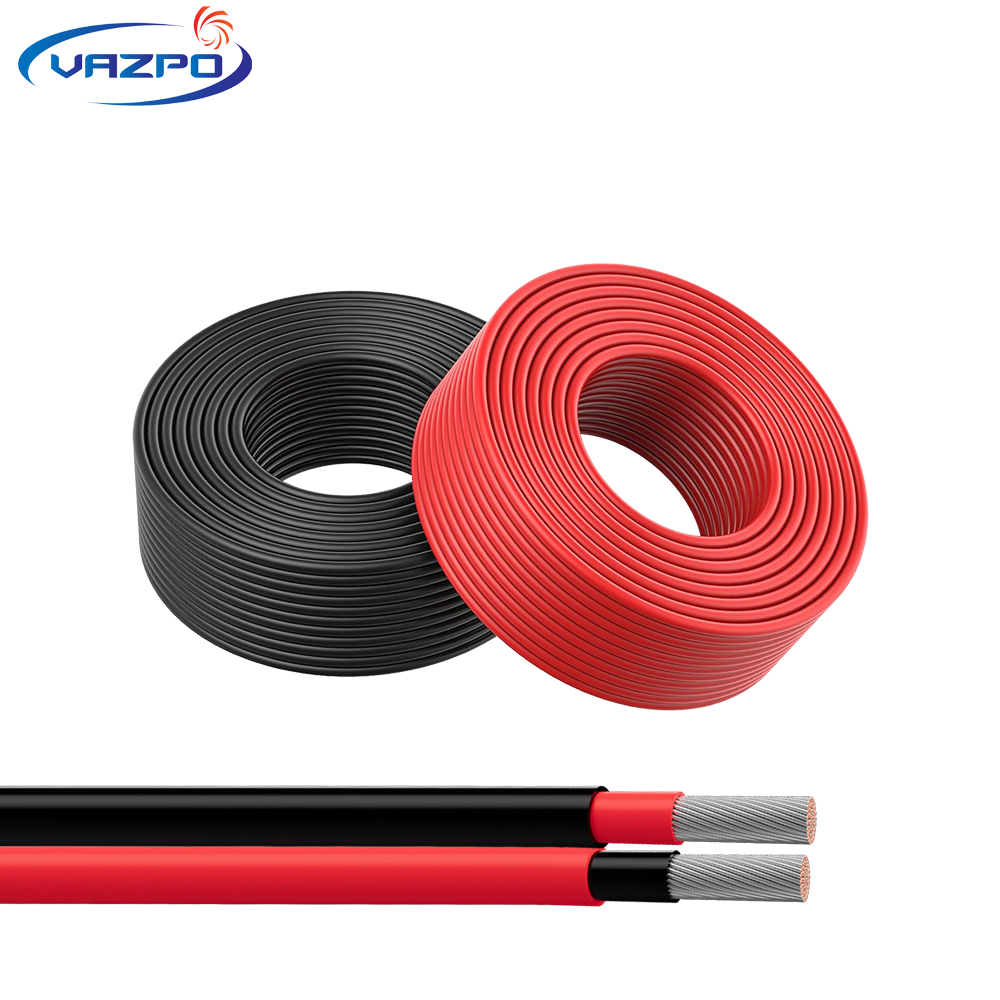
Reinforced construction designed for demanding photovoltaic environments.


*Temperature Tolerance: Supports consistent performance in extreme environments, with an operating range from -40°C to +125°C.
*Weather & Wear Resistance: Built to resist UV radiation, moisture, and mechanical stress, ideal for long-term outdoor and industrial applications.
*Standards Certified:Fully compliant with EN 50618, ensuring safety and reliability. *25-Year Service Life:Engineered for durability, offering up to 25 years of stable, low-maintenance operation.
*Quote Online Now, Contact Us, Free Samples Available.


Submit product, specification and quantity for review before payment.
Leave business contact information before accessing technical files.
Key product advantages are presented in a concise format for engineers, distributors and project buyers.
Reinforced construction designed for demanding photovoltaic environments.
Performance verification information can be reviewed together with the related technical documentation.
TÜV, CE, RoHS and REACH compliance information presented in one place.
Positioning focused on durability, safety and long-term project reliability.
Original product application, structure, features and technical data.
| Model | PV 2000DC (TCA) |
|---|---|
| TECHNICAL INDICATORS | |
| Rated voltage | DC 2000V |
| Standard | PPP 58209A:2022 |
| Working temperature | -40℃~90℃ |
| Conductor maximum temperature | 120℃ |
| Short circuit temperature | 280℃ 5s |
| Bending radius | D<8mm 4D; D≥8mm 6D |
| Service life | ≥25 Years |
| STRUCTURE | |
| Conductor Material | Tinned copper based |
| Insulation | Low-smoke, halogen-free, flame-retardant irradiated polyolefin |
| Sheath | Low-smoke, halogen-free, flame-retardant irradiated polyolefin |
| Color | Black or Red |

| Corss | Construction(n/mm) | DIA. | Resistance | Insulation | Sheath |
|---|---|---|---|---|---|
| Section(mm2) | (mm) | of Conductor(Ω/km) | Thickness(mm) | Thickness(mm) | |
| 2×4 | 2×64/0.31 | 2×2.86 | 5.090 | 1.1 | 0.8 |
| 2×6 | 2×95/0.41 | 2×4.61 | 3.390 | 1.1 | 0.8 |
| 2×10 | 2×150/0.41 | 2×5.79 | 1.950 | 1.1 | 0.8 |
| 2×16 | 2×231/0.41 | 2×7.19 | 1.240 | 1.1 | 0.9 |
| 2×25 | 2×329/0.41 | 2×7.19 | 0.795 | 1.3 | 1.0 |

PV cables for large-scale solar power generation projects.

Reliable cabling solutions for large commercial and industrial PV systems.

Durable solar cables for large ground-mounted photovoltaic installations.
| Packing Pictures | Packing/Meter | Pack Reel | Pallet Dimension(m) | Pallet/Meter |
|---|---|---|---|---|
 |
100 Meter/Roll | / | 1.12×1.12×1.1m | 16000 |
|
200 Meter/Roll | / | 1.12×1.12×1.1m | 16000 |
 |
500 Meter/Reel | Plywood | 1.12×1.12×1.1m | 12000 |
|
1000 Meter/Reel | Plywood | 1.12×1.12×1.1m | 12000 |
|
3000 Meter/Reel | Plywood | 1.12×1.12×1.1m | 12000 |


Original VAZPO certificate scans are available for buyer review. Confirm product-specific applicability with the sales team.


Real VAZPO factory, workshop and packing-area imagery.


Answers about quotations, product documents, samples, certification and project procurement.
Yes. It delivers the same electrical performance, conductivity, and current-carrying capacity as traditional tinned copper PV cables.
Compared with tinned copper PV cables, it can reduce material costs by up to 30%, especially in large-scale projects.
Yes. It is TÜV and CE certified, complies with IEC standards, and is UV- and heat-resistant with a service life of up to 25 years.
No. There is no loss in power generation efficiency compared to tinned copper PV cables.
Yes. It has been successfully used in the Middle East, Southeast Asia, Africa, and other regions worldwide.
Related products from the same product category.