


What Size Wire for Solar Panels Should You Use?
Choosing the right wiring is key to making sure your solar system works properly. Many users experience performance issues or safety hazards with their solar panels, even if they have high-quality panels. This is often because of poor wiring. About 20% of residential solar systems have wiring problems. These problems reduce the efficiency of the systems or create safety risks. Solar power wiring is different from regular household wiring. It can handle being outside and send direct current (DC) power the right way. So, Solar Cables that meet the right standards must be chosen based on general technical rules. If you neglect this aspect, your system may fail and you may have to pay a lot of money to repair it.
Why Solar Cable Size Matters
- Electrical Pathway: Solar cables are the main way to transmit electricity from solar panels to battery storage systems.
- Safety Hazards: Solar Panel Wires that are too small generate too much heat because of electrical resistance. This can lead to serious fire risks.
- Current exceeding safe capacity causes conductor overheating
- 30% overload produces approximately 70% additional heat
- Heat degradation damages insulation and may ignite nearby materials
- UV-resistant insulation cannot overcome fundamentally inadequate wire sizing
- Performance Impact: Voltage drop between panels and batteries directly reduces charging efficiency.
- Professional standards require maintaining below 2% voltage drop
- 3% drop in 12V systems loses approximately 0.36 volts
- Lost energy converts to heat rather than battery charging
- Results in wasted solar energy production
- Selection Standard: The American Wire Gauge (AWG) system governs proper wire selection.
- Lower AWG numbers correspond to thicker wires with reduced resistance
- 10 AWG solar cable demonstrates half the resistance of 14 AWG wire
- Thicker cables maintain significantly higher efficiency for elevated currents
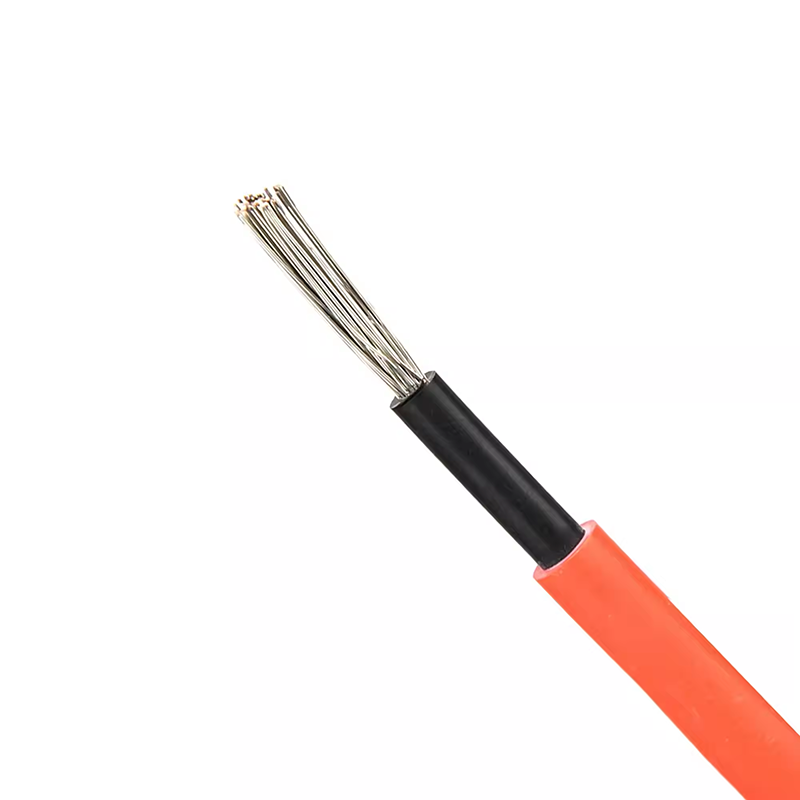
The Basics of Solar Wire Sizing
- Key Electrical Principle: Electrical current encounters resistance in wires. This resistance increases with longer wire lengths and decreases with larger wire diameters, following precise mathematical relationships.
- Impact of Distance: Wire length significantly impacts performance. Voltage drop becomes substantial over long distances (e.g., per 100 feet), necessitating thicker wires for systems where panels are far from other components.
- Current-Carrying Capacity: The system’s total current output is a primary factor. Higher-wattage systems and multiple connected panels increase the current flow, which requires thicker wires to carry the load safely.
- The 10 AWG Standard: 10 AWG solar cable is a common and versatile choice for residential use, effectively balancing a high current capacity (up to 30 amps) with practical flexibility for installation.
- Environmental Durability: Solar panel wire must be specifically designed to endure outdoor conditions, including temperature extremes, moisture, and UV radiation. High-quality solar cables use special insulation materials that not only maintain flexibility in cold weather but also ensure that transmission efficiency is not reduced by sunlight exposure.
What Size Cable Should I Use for a 12V Solar Panel?
Select the appropriate solar cable based on your system configuration to ensure safety and efficiency.
|
Application Scenario |
Recommended Wire Gauge |
Key Considerations |
|
Single 100W panel (5.5A) |
14 AWG |
Suitable for very short runs; margin reduces with distance or high temperatures |
|
Single 200W panel (11.1A) |
10 AWG |
Required for runs over 10 feet; improves efficiency and allows for system expansion |
|
Two 200W panels in parallel (22.2A) |
8 AWG or thicker |
Necessary for handling doubled current output in parallel configurations |
|
Panels in series |
14 AWG or thicker |
Lower current flow may permit smaller wires; check specific system requirements |
Note: Always consult voltage drop tables and local electrical codes. Thicker wires provide better future-proofing and safety margins.
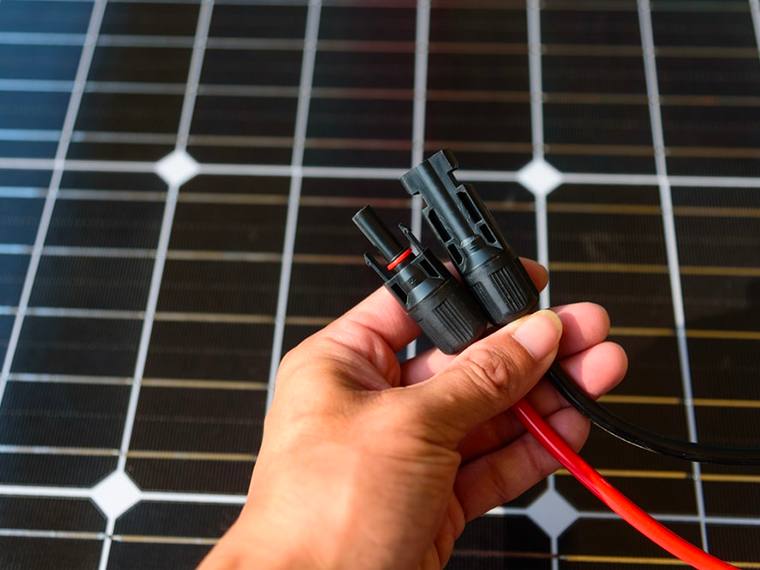
Conclusion: Safety and Efficiency First
The specifications of solar cables need to be calculated based on the system’s power output and cable length; 10 AWG cables are typically used in residential systems. Generally, the selected cable must be suitable for outdoor environments, able to safely carry the required current, and comply with electrical codes. Conversely, choosing the wrong cable can lead to insufficient power generation, system malfunctions, or safety hazards. Selecting slightly thicker wires allows for this safety margin. Solar cables are a critical component of the system; using qualified products ensures the long-term stable operation of the system.