


How to Choose Solar Cable Models and Specifications?
In recent years, photovoltaic power generation has advanced quickly, and PV power plants are playing a bigger role in the development of clean energy. Solar Cables are also essential, even though most people concentrate on parts like modules, inverters, and transformers.
In addition to reducing power generation efficiency, poorly chosen cables can also raise maintenance costs and present safety hazards. As a result, cables need to meet international requirements like TÜV certification or UL 4703. So, how do you make a decision? Take into account the following elements.
Several Parameters to Consider When Selecting a Cable
- Conductor Cross-Sectional Area
The current a cable can handle depends primarily on its cross-sectional area. 4mm² and 6mm² are the two most commonly used specifications in PV projects, meeting the needs of most residential and commercial systems.
- Conductor Materials
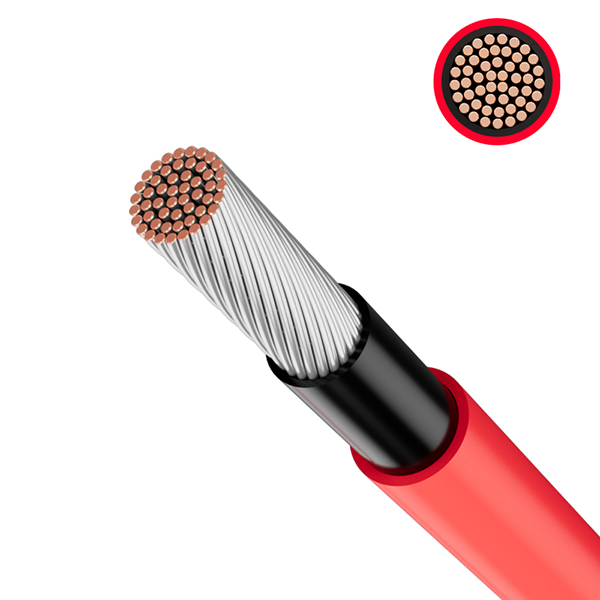
Tinned copper and aluminum alloy are common materials for solar cables:
Tinned copper offers excellent conductivity, strong corrosion resistance, and increased durability;
Aluminum alloy is lighter and less expensive, making it suitable for large-scale power plant projects.
- Insulation Material
The cable outer layer must be heat- and UV-resistant. XLPE or XLPO materials are common, offering excellent weather resistance and mechanical strength.
- Voltage Rating
It must match the system design. Common ratings include 600V, 1000V, and 2000V.
- UV Resistance
solar cables, exposed to long-term outdoor use, must be UV-resistant, otherwise they will quickly age and crack.
- Temperature Rating
Wet: 90°C (120°F)
Dry: 105°C (150°F)
- Structural Design
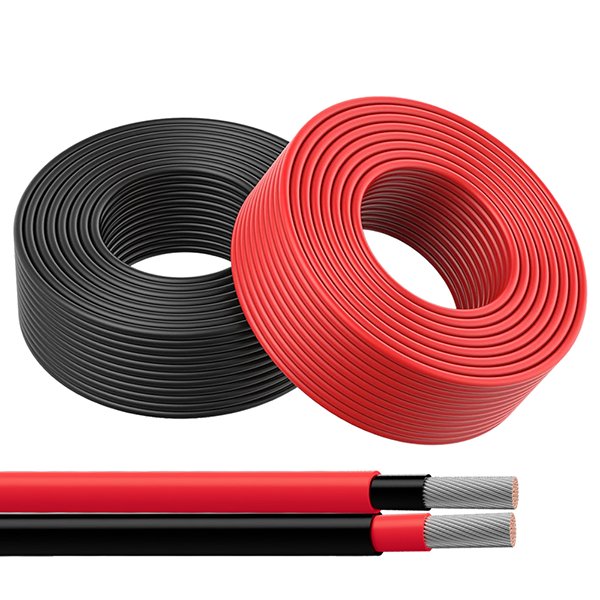
Typically, single-core, unArmored Cables are used for easy installation and wiring.
How to Choose Cable Size
If the cable is too thin, the voltage drop will be significant, affecting power generation and potentially overheating, posing a safety risk.
When selecting cable size, it is best to reserve 10%-20% more capacity than the system’s maximum current for greater safety.
- Common References:
4mm² solar cable: Can Carry 55A
6mm² solar cable: Can Carry 70A
If you’re unsure, it’s recommended to consult a professional cable manufacturer for calculation assistance to avoid errors.
Two Main Materials for solar cables
Tinned copper and aluminum alloy are the most commonly used, each with its own advantages:
-
Tinned copper cable:
High conductivity and low power loss
Corrosion resistance, particularly suitable for humid and coastal environments
Long service life and excellent stability
-
Aluminum alloy cable:
Lightweight, easier to transport and install
Low cost, suitable for large ground-mounted power stations
Stable performance and high cost-effectiveness
Tinned copper is generally used for residential and commercial projects, while aluminum alloy is preferred for large power stations to reduce overall construction costs.
Choosing Current Rating
The cable’s rated current must be greater than the system’s maximum current. For example, if the system’s maximum output is 10A, a cable rated 11A-12A should be selected.
Leaving a little margin can prevent overheating and facilitate future expansion. For example, if the system current approaches the limit of 4mm² cable, switching directly to 6mm² will be more reliable.
Summary
solar cables may seem insignificant, but they directly impact the efficiency, safety, and lifespan of your power plant. When selecting cables, remember to consider:
- Material (tinned copper or aluminum alloy)
- Voltage, current, and temperature ratings
- Whether the cross-sectional area matches system requirements
- UV and weather resistance
Choosing the right cable ensures a stable and efficient PV system, reduces maintenance headaches, and ensures a guaranteed return on investment.