


How Solar Extension Cables Improve PV System Connectivity?
As the world shifts toward clean energy, solar (PV) systems have emerged as a cornerstone of sustainable power generation. While solar panels and inverters often take center stage, the importance of reliable connecting components—especially solar extension cables—cannot be overlooked. These cables play a pivotal role in system efficiency, safety, and ease of installation, making them indispensable for residential, commercial, and utility-scale solar projects.
Understanding Solar Extension Cables
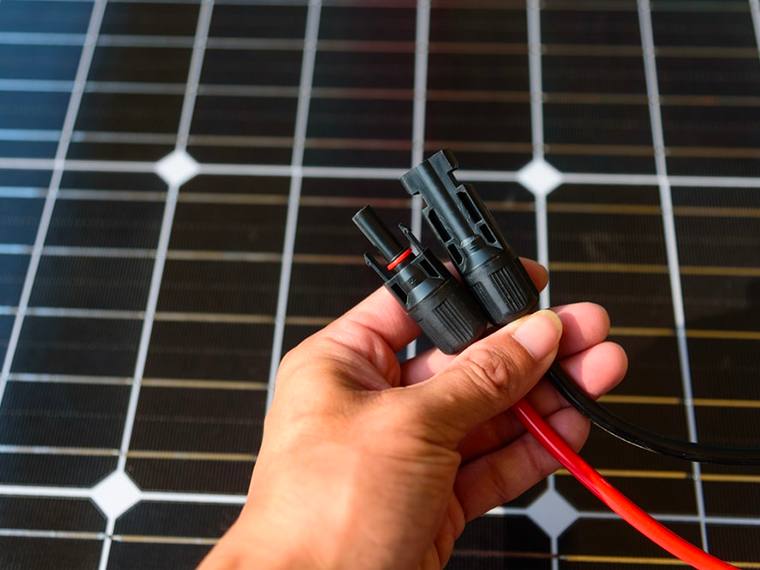
Solar extension cables are pre-assembled or customizable wiring solutions designed to link solar panels, combiner boxes, junction boxes, and inverters. Constructed with highly conductive materials such as tinned copper or advanced aluminum alloys, these cables feature durable insulation—often cross-linked polyethylene (XLPE)—for enhanced protection. Many come pre-fitted with MC4 or compatible connectors, enabling quick, tool-free installation.
Standard solar extension cables are rated for 1000V or 1500V DC systems and meet stringent international certifications (IEC, EN, UL). Their UV-resistant, flame-retardant, and weatherproof properties ensure reliable performance in harsh outdoor conditions, a necessity for solar installations exposed to extreme environments.
Common Challenges in PV System Wiring
PV systems frequently require extensive cabling between components, and improper cable selection can lead to several issues:
- Voltage Drop: Undersized or low-conductivity cables can result in significant power loss over long distances.
- Complex Installations: Connecting multiple panel strings increases wiring complexity and the potential for errors.
- Environmental Stress: Cables must endure prolonged UV exposure, temperature swings, and moisture.
- Safety Risks: Poor-quality cables may overheat, degrade prematurely, or even pose fire hazards.
Solar extension cables mitigate these challenges by offering standardized, durable, and easy-to-deploy connectivity solutions tailored for PV applications.
Advantages of Solar Extension Cables
- Faster, Easier Installation
Pre-terminated MC4 connectors eliminate the need for field crimping, reducing labor time and minimizing wiring mistakes. This plug-and-play approach accelerates deployments for both rooftop and ground-mounted systems. - Enhanced Energy Efficiency
Properly sized conductors (e.g., 4mm², 6mm², or 10mm²) minimize voltage drop over long runs. High-conductivity materials like tinned copper or modern aluminum alloys ensure optimal current flow and consistent power output. - Superior Durability and Safety
Premium cables operate reliably in extreme temperatures (–40°C to +120°C) and resist UV radiation, ozone, and moisture. Flame-retardant insulation further reduces fire risks, enhancing system longevity. - Design Flexibility
Solar projects vary in layout and scale. Extension cables adapt to diverse configurations, whether for irregular rooftops, solar carports, or sprawling utility installations. - Compliance with Global Standards
Most cables integrate seamlessly with MC4 connectors and carry internationally recognized certifications, simplifying system upgrades and expansions.
Tinned Copper vs. Aluminum Alloy Conductors
While tinned copper remains the gold standard for conductivity, aluminum alloy cables are gaining traction in large-scale projects due to their cost efficiency and lighter weight. Advances in aluminum alloy technology—such as improved corrosion resistance and tensile strength—now make them viable for high-voltage, long-distance solar applications.
Selecting and Maintaining Solar Extension Cables
Key considerations when choosing cables include:
- Voltage Rating: Align with system requirements (1000V or 1500V DC).
- Conductor Size: Balance distance and current load to reduce power loss.
- Environmental Durability: Prioritize UV-resistant, weatherproof, and flame-retardant materials.
- Certifications: Look for TÜV, IEC, or UL compliance to guarantee quality.
Routine inspections are equally critical. Checking for wear, loose connections, or insulation damage helps sustain system performance and safety over time.