


Copper Clad Aluminum Cable vs Pure Copper Cable
Rising copper prices are putting significant pressure on contractor costs. Cables represent a substantial portion of material expenses. This creates a critical challenge: how to Control Cable costs without compromising performance or safety. This guide explains the role of copper clad aluminum (CCA) wire as a viable, cost-effective alternative to pure copper cable.
Copper Clad Aluminum Cable vs. Pure Copper Cable
What is Copper Clad Aluminum (CCA) Cable?
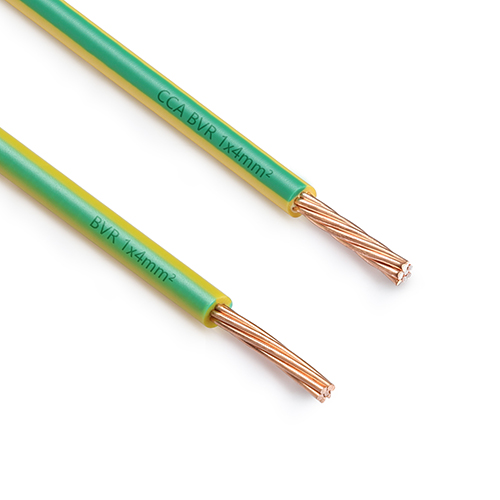
Copper-clad aluminum (CCA) cables are characterized by their use of a cladding and welding process to achieve a metallurgical bond between copper and aluminum. The outer copper layer encases the aluminum core, preventing oxidation and ensuring structural stability. They utilize an enhanced insulation design, aiming to provide electrical performance comparable to pure copper cables. Therefore, comparing CCA cables to pure copper cables is practically relevant.
What is Pure Copper Cable?
Pure copper cable is the traditional standard, prized for its excellent conductivity. However, its cost is intrinsically and directly tied to the global copper market, leading to significant price volatility and budget uncertainty for projects.
Key Differences Between CCA Cable and Pure Copper Cable
The core cca vs copper comparison hinges on several factors:
- Material Composition: Copper-clad aluminum cables utilize a cladding and welding process to achieve a metallurgical bond between copper and aluminum, while pure copper cables are made entirely of solid copper. This fundamental difference determines their cost and performance characteristics.
- Cost Structure: Copper clad aluminum cable offers inherent material cost savings and superior price stability, insulating projects from volatile copper markets. Pure copper cable costs are directly and highly sensitive to raw material price fluctuations.
- Performance Basis: Through precision engineering, copper clad aluminum cable achieves electrical conductivity and current-carrying performance on par with pure copper cables in standard applications, when properly sized. Pure copper maintains a slight absolute conductivity advantage but at a significantly higher cost premium.
- Physical Handling: CCA cable offers notable advantages in flexibility, facilitating easier installation. Pure copper cable is inherently more rigid, which can impact handling efficiency.
Electrical Performance in Power Application
In power applications, correct sizing is paramount for copper clad aluminum wire.
- Conductivity: The outer copper layer ensures reliable connectivity and current transfer.
- Ampacity: Properly selected CCA cable meets the required current-carrying capacity.
- Voltage Drop: It can achieve voltage drop control consistent with copper standards. The fundamental principle for CCA cable vs copper cable performance is correct engineering selection.
Installation and Handling Efficiency
Copper clad aluminum (CCA) cables offer practical advantages during construction:
- Superior Flexibility: Enhanced pliability allows for easier manual bending and routing through tight spaces, reducing installer fatigue.
- Streamlined Termination: The copper exterior ensures compatibility with standard electrical terminals and termination procedures.
- Efficient On-site Handling: The material properties allow for faster cable pulling and placement in standard raceways.
Reliability, Safety, and Long-Term Operation
Certified copper clad aluminum (CCA) cable, when installed correctly, ensures dependable operation:
- Stable Conductor: The metallurgical conductorprevents separation between the aluminum and copper layers.
- Enhanced Insulation: The thickened insulation design provides improved mechanical protection and dielectric strength.
- Long-Term Safety: It offers a durable and safe solution for a wide range of standard electrical applications.
Rising Copper Prices and Contractor Cost Pressure
Global copper price volatility is a major challenge. As a primary cost driver, fluctuating copper prices create budgeting uncertainty and pressure project margins, making the search for stable, cost-effective alternatives like copper clad aluminum essential.
Cost Comparison: Project-Level Impact
The cca vs copper cost analysis clearly favors CCA for budget management.
- Pure Copper Cost: Exposed to full market volatility.
- CCA Advantage: Leverages lower-cost aluminum, offering immediate savings and predictable pricing.
- Contractor Value: Directly reduces material procurement costs, improving overall project cost control and profitability.
Application Analysis: How Contractor Should Choose
|
Scenario |
Recommended Cable Type |
Reason |
|
Large-Scale Electrical Installations |
Copper Clad Aluminum (CCA) Cable |
High cable volume maximizes cost savings with equivalent performance. |
|
Commercial & Industrial (C&I) Rooftop |
Copper Clad Aluminum (CCA) Cable |
Cost-sensitive projects benefit from lower costs. |
|
Budget-Constrained Projects |
Copper Clad Aluminum (CCA) Cable |
Provides cost certainty while maintaining electrical specifications. |
|
Specified Pure Copper by Client/Code |
Pure Copper Cable |
Mandatory project requirement. |
|
Extreme Environmental Conditions |
Pure Copper Cable |
Where specific standards explicitly require pure copper. |
CCA Cable vs. Pure Copper Cable: Summary Table for Contractor Procurement
|
Factor |
Engineering-Grade CCA Cable |
Pure Copper Cable |
|
Electrical Performance |
Performance is achieved through its copper-clad structure, which ensures surface conductivity and connection reliability comparable to pure copper. |
Excellent, the traditional benchmark. |
|
Material Cost |
Provides significant material cost savings while maintaining a stable price structure. |
High and directly tied to volatile copper prices. |
|
Installation |
Offers good flexibility compared to solid copper, facilitating easier handling and routing. |
Standard installation characteristics. |
|
Project Cost Impact |
Reduces total material and procurement costs, directly improving project margin and budget predictability. |
Increases material cost, pressures budget. |
|
Ideal Project Type |
Ideal for cost-sensitive projects with high performance requirements, providing a solution that combines cost-effectiveness and performance. |
Projects where specifications mandate pure copper use. |
Conclusion
For contractors navigating high copper prices, copper clad aluminum cable presents a rational, engineered solution. It delivers equivalent electrical performance and reliability for many applications while providing decisive cost advantages. The CCA cable vs copper cable decision ultimately balances project specs, budget, and performance needs.
Get Your Project-Specific Support
Ready to evaluate copper clad aluminum wire for your next project? Contact Vazpo today for:
- Project-specific cable sizing and selection support.
- Detailed technical datasheets and certification documents.
- Customized bulk procurement solutions.
- A formal quote tailored to your project’s needs.
Reach out for a professional consultation and see how copper clad aluminum solutions can secure your project’s profitability.