


Analysis of the Trend of Aluminum Solar Cables Replacing Copper Solar Cables
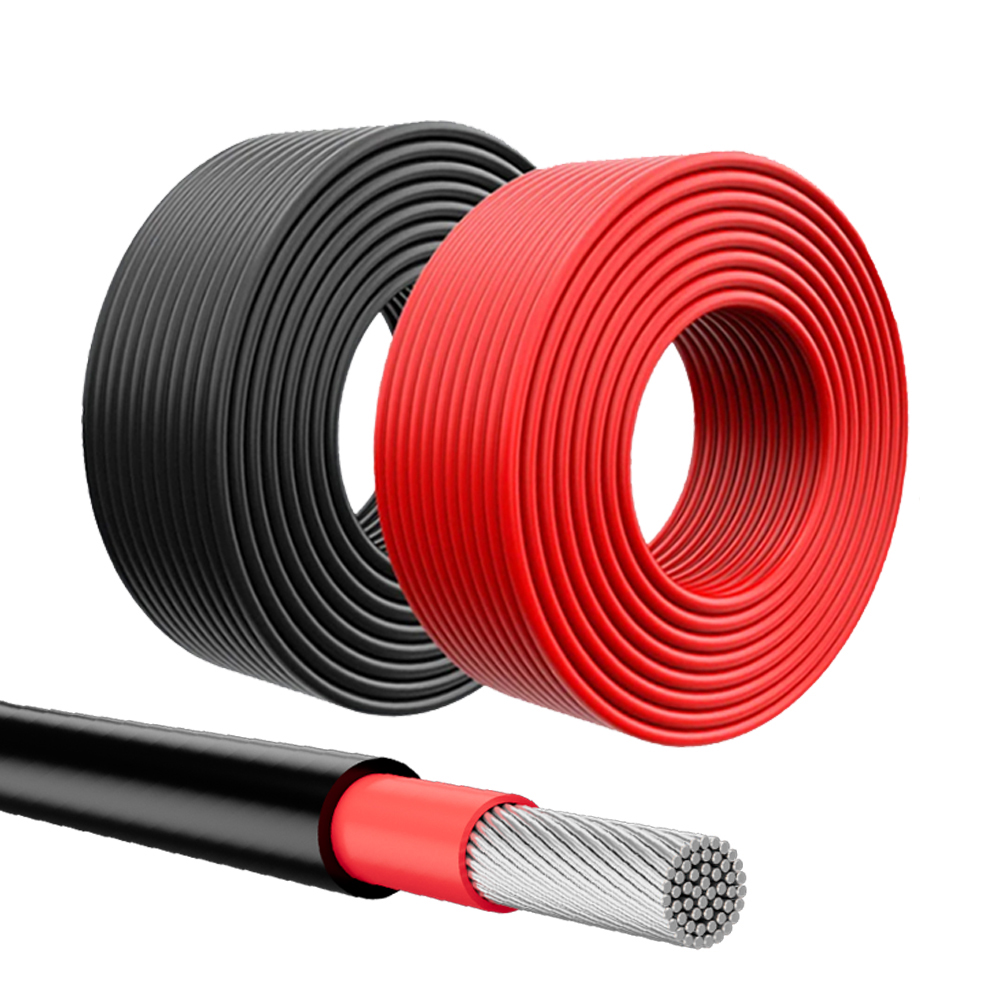
Against the backdrop of the global solar industry’s focus on lowering installation costs and enhancing sustainability, aluminum conductor Solar Cables are rapidly shifting from being an alternative to becoming a preferred solution. They demonstrate undeniable economic and technical superiority over traditional copper conductors. This structural transition is fueled by aluminum’s inherent benefits, directly addressing the industry’s need for refined cost control and reduced environmental impact.
This detailed analysis reorganizes the core arguments into a logical sequence, first concentrating on the financial necessity, followed by the tangible engineering benefits, and concluding with critical technical solutions and environmental advantages.
I. The Unassailable Economic Case for Aluminum Conductors
The primary catalyst driving the aluminum solar cable trend is the significant financial relief aluminum provides, especially in large-scale photovoltaic (PV) projects where cabling constitutes a major capital expenditure.
1. Cost Mitigation and Price Stability
A direct solar cable raw material analysis highlights the core advantage: the market price of aluminum is consistently 30% to 50% lower than that of copper. This immediate saving translates into dramatically reduced procurement costs for developers, directly contributing to solar project cost reduction materials.
Furthermore, aluminum’s abundance offers stability. As the third most common element (comprising about 8% of the Earth’s crust), aluminum’s supply is highly secure, leading to low price fluctuations. This is critical given that the cost of copper solar cable is rising and its price volatility imposes significant financial risk. Adopting aluminum minimizes the overall copper price impact on solar cables and hedges against potential copper shortage solar industry concerns.
II. Engineering and Logistical Efficiency
Beyond initial material costs, the physical properties of Pv Cable aluminum conductor technology introduce substantial efficiency gains during construction and operation.
2. Significant Lightweight Solar Cable Benefits
The density ratio is stark: aluminum is only 30% as dense as copper. When engineered for equivalent current-carrying capacity (ampacity), aluminum conductor cables can achieve a weight reduction of 50% to 70% compared to their copper counterparts.
This profound difference translates into:
- Streamlined Logistics: Lower cable weight drastically reduces transportation costs and simplifies logistics management, especially over long distances.
- Faster, Cheaper Installation: Lighter cables require less labor and specialized equipment for handling and pulling, accelerating the installation timeline and cutting labor expenses.
- Structural Load Reduction: For demanding installations, such as utility-scale tracker systems or high-elevation rooftop arrays, the reduced load lessens stress on mounting structures and roof integrity, a key advantage for structures with strict load-bearing limits.
III. Overcoming Technical Hurdles: Ensuring Longevity
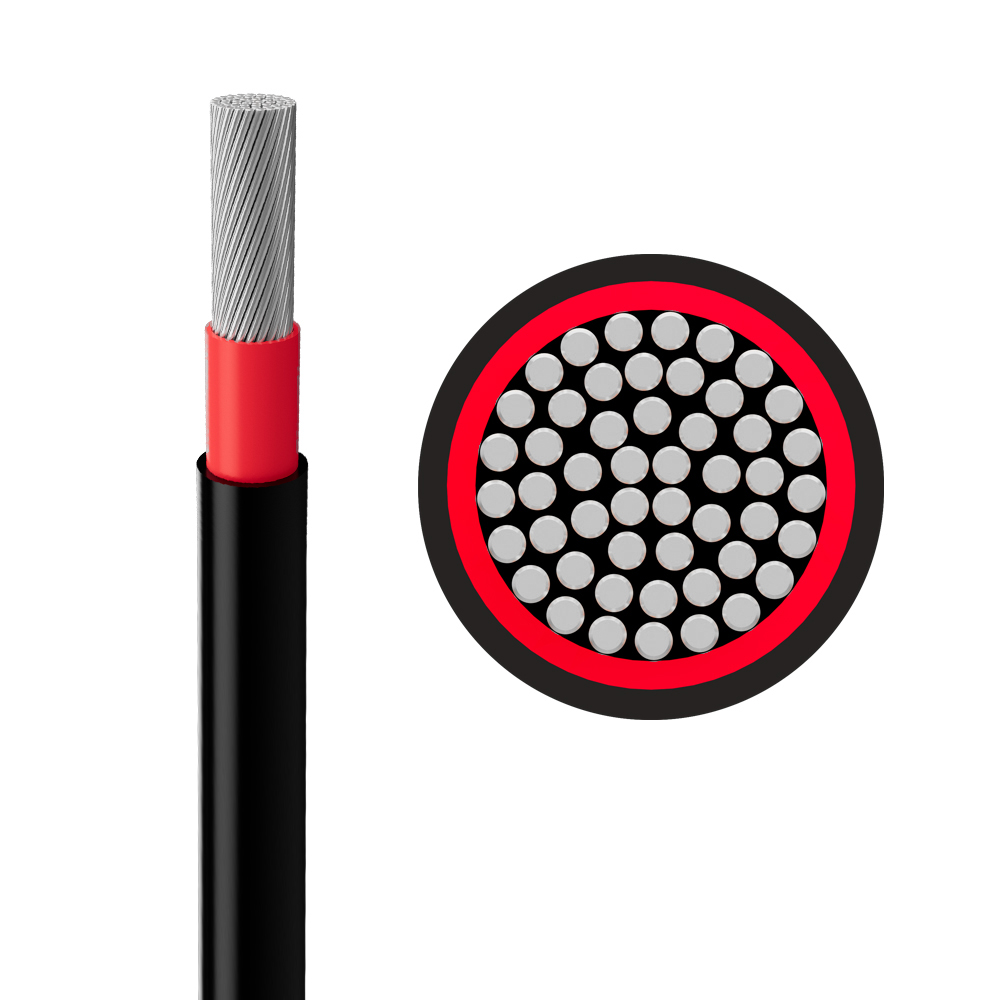
Historically, the Achilles’ heel of aluminum conductors has been the challenge of creating a durable, long-term connection with copper terminals (the aluminum vs copper solar cable connection issue). However, innovative, specialized solutions have comprehensively resolved these technical complexities, ensuring reliability across the project lifespan.
3. Advanced Copper-Aluminum Connection Solutions
Reliable operation hinges on preventing galvanic corrosion and managing thermal expansion differentials. Solutions developed by industry pioneers like Vazpo provide critical assurance:
- Copper-Aluminum Transition Terminals: These bimetallic connectors are used to isolate the two dissimilar metals, acting as an effective barrier to prevent electrochemical corrosion that can occur when copper and aluminum are in direct contact in the presence of moisture.
- Optimized Joint Design: The connection structure is engineered to withstand extreme conditions, ensuring terminal integrity and conductivity across a wide operating range, from -40℃-90℃.
- Precision Crimping Tools: Specialized tools are essential for achieving an optimal, low-resistance mechanical connection. Their use can reduce contact resistance by over 60%, which is fundamental to preventing hotspots and maximizing power transfer efficiency.Rigorous laboratory testing confirms that, with these innovative solutions, the service life of aluminum alloy PV cable systems can be confidently extended to 25 years, matching the expected lifespan of solar modules.
IV. Sustainability and Environmental Alignment
For an industry centered on clean energy, the environmental profile of raw materials is paramount. Aluminum excels in this area, aligning perfectly with modern sustainability standards.
4. Reduced Carbon Footprint and Energy Consumption
The production of aluminum is inherently less energy-intensive than copper. Manufacturing aluminum requires 70% less energy than producing an equivalent amount of copper, immediately lowering the embodied carbon of the cables.
Applied to a commercial project, like a 100MW solar power station, the lifetime use of aluminum conductors can reduce the project’s overall carbon emissions by 35%. This performance is a major factor in meeting stringent environmental benchmarks, including the latest EU carbon footprint standards for PV products, and showcases how aluminum cables contribute to genuine net-zero goals.
V. Market Trajectory and Future Outlook
With breakthroughs in high-conductivity aluminum alloy materials and the integration of intelligent monitoring technology for long-term assurance, the trajectory for aluminum conductors is firmly upward.
The ongoing aluminum solar cable trend predicts a significant increase in market share by 2030, driven by the compelling combination of cost savings, ease of installation, and environmental responsibility. As a leader in the field, Vazpo continues to advance these crucial copper-aluminum conversion solutions, ensuring that safety and reliability remain the foundation for the solar industry’s future growth.