


Aluminum vs. Tinned Copper Solar Cable: Which is Better?
Any photovoltaic (PV) system’s long-term dependability, efficiency, and safety depend on the choice of Solar Cable. Aluminum solar cable is now the go-to option for many EPC contractors and utility-scale projects in today’s cost-driven solar market because it provides the best possible balance between performance and cost. EPC contractors, solar developers, and distributors frequently compare two of the most popular options: aluminum solar cable and tin copper solar cable.
In order to assist you choose the best cable for your PV project, this 2025 guide offers a detailed, engineering-based comparison of aluminum and tinned copper Solar Cables. It covers conductivity, cost, installation, corrosion resistance, safety, and real-world applications.
-
What Is the Difference Between Aluminum and Tinned Copper Solar Cables?
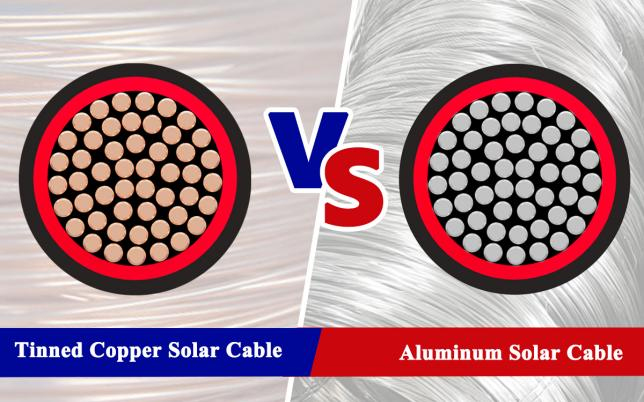
The conductor material is the primary distinction.Tinned Copper Solar Cable enhances oxidation resistance and long-term connection stability by using high-purity copper conductors that have been lightly treated with tin.
Aluminum or aluminum-alloy conductors are used in aluminum solar cables, which have substantially reduced material costs and are lighter.When properly designed and installed, both types are frequently utilized in contemporary PV systems.
-
Why Aluminum Solar Cable Is Adequate for the majority of PV Systems Due to Electrical Conductivity?
1.Power loss and system efficiency are directly impacted by electrical conductivity
Under the same cross-sectional area, copper has around 60% higher electrical conductivity than aluminum; nevertheless, because PV systems are built on current capacity rather than material preference, aluminum conductors can fully satisfy operational requirements when scaled appropriately.
The resistance of canned copper is somewhat higher than that of bare copper, however this difference is negligible and has no effect on the efficiency of PV systems.
With correct conductor sizing, aluminum solar cables meet PV system current requirements while significantly reducing material costs.For most utility-scale and ground-mounted PV systems, aluminum delivers a better cost-to-performance ratio than copper-based alternatives.
2.Weight & Installation: A Key Advantage of Aluminum Solar Cable
Weight plays a key role in large-scale solar projects. Aluminum solar cables weigh roughly one-third of copper cables with equivalent current capacity.Lighter weight reduces transportation costs, structural load on mounting systems, and installation labor.
In terms of flexibility: Copper cables are naturally more flexible and better suited for installations requiring frequent bending.Modern aluminum-alloy solar cables have improved mechanical strength and flexibility compared to earlier generations.
Aluminum solar cables provide a clear installation advantage for large-scale PV projects, reducing labor effort, logistics cost, and structural load.
3.Corrosion Resistance: Modern Aluminum Solar Cables in Outdoor Environments
Solar cables must operate reliably for 25–30 years in harsh outdoor environments.Tinned Copper Solar Cables benefit from the tin coating, which effectively protects the copper conductor from oxidation and corrosion, especially in humid or coastal areas.Aluminum Solar Cables form a natural oxide layer that slows corrosion, but improper installation or contact with dissimilar metals may lead to galvanic corrosion.
With proper connectors and installation standards, modern aluminum solar cables offer reliable corrosion resistance for most outdoor PV applications.
-
Thermal Expansion & Safety: Engineering Controls Make Aluminum Safe
Thermal expansion affects long-term connection reliability.Aluminum expands and contracts nearly twice as much as copper under temperature changes.
Excessive thermal movement may loosen connections over time if not properly designed.Tinned copper cables exhibit lower thermal expansion, helping maintain tight and stable electrical connections throughout the system’s lifespan.
When installed with certified connectors and correct torque control, aluminum solar cables operate safely and reliably in modern PV systems.
Aluminum vs. Tinned Copper Solar Cable: Quick Comparison
|
Feature |
Aluminum Solar Cable |
Tinned Copper Solar Cable |
|
Electrical Conductivity |
Lower (larger size required) |
Higher |
|
Weight |
Very light |
Heavier |
|
Installation Cost |
Lower |
Higher |
|
Corrosion Resistance |
Good (installation-sensitive) |
Excellent |
|
Thermal Expansion |
Higher |
Lower |
|
Material Cost |
Low |
High |
-
Why Aluminum Solar Cable Is the Preferred Choice for Modern PV Projects
The right choice depends on your application and priorities:
Why EPCs Prefer Aluminum Solar Cable?
1.Lower material and transportation costs for large-scale PV projects
2.Lighter weight simplifies installation and reduces labor cost
3.Fully compliant with IEC 62930 and EN 50618 when properly specified
4.Ideal for utility-scale, ground-mounted, and long-distance DC transmission
While tinned copper solar cables are still used in niche applications, aluminum solar cable has become the mainstream solution for cost-optimized PV system design.
In 2025, with most PV systems operating at 1500V DC, both aluminum and tinned copper solar cables can meet international standards such as IEC 62930 and EN 50618 when correctly specified.
- Utility-Scale Photovoltaic Projects Using Aluminum Solar Cable
Aluminum solar wire has emerged as the go-to option for large-scale and utility-scale photovoltaic systems because of its exceptional cost effectiveness and engineering flexibility. Aluminum solar cables dramatically lower overall cable weight and material costs without sacrificing electrical performance for long-distance DC transmission, large conductor cross-sections, and centralized inverter architectures.
Aluminum solar cables are commonly utilized in high-capacity 1500V DC systems, desert photovoltaic projects, and ground-mounted solar plants with appropriate system design, approved connectors, and standardized installation procedures. Aluminum solar cable is becoming recognized as the most practicable and scalable conductor option for contemporary utility-scale PV projects as EPC contractors continue to place a high priority on CAPEX minimization and logistical efficiency in 2025.
-
Aluminum Solar Cable Manufacturer & Project Support
We offer both aluminum and tinned copper solar cables with configurable conductor sizes, insulation materials, and certifications to meet various PV project requirements as a seasoned solar cable producer serving numerous worldwide markets.
Are you unsure about the best solar cable for your project? For a free cable selection recommendation and quote, get in touch with our technical staff.