When you’re setting up your solar panel system, picking the right wiring isnât just a detailâitâs a big deal for making sure everything runs smoothly and safely. Out of all the options out there, many folksâwhether hobbyists or prosâprefer using 10 AWG solar wire. I mean, itâs pretty much a go-to choice for good reasons. As James Anderson, whoâs pretty well-known in the solar world with Solar Innovations, says, âChoosing the right wire size really matters; 10 AWG Solar Wire helps with better conductivity and cuts down on voltage loss, making it a solid pick for most setups.â
In this guide, we’re gonna take a closer look at why using 10 AWG Solar Wire makes a difference. Weâll cover whatâs so great about it, some key specs to keep in mind, and tips on what to look out for when you’re picking your wiring. Honestly, understanding what makes good solar wiring helps ensure your systemâs running efficiently and sticking to industry standards. So, letâs dig into why 10 AWG Solar Wire is such a popular choice and how it can seriously boost your systemâs performance.
Understanding AWG Ratings and Their Importance in Solar Wiring
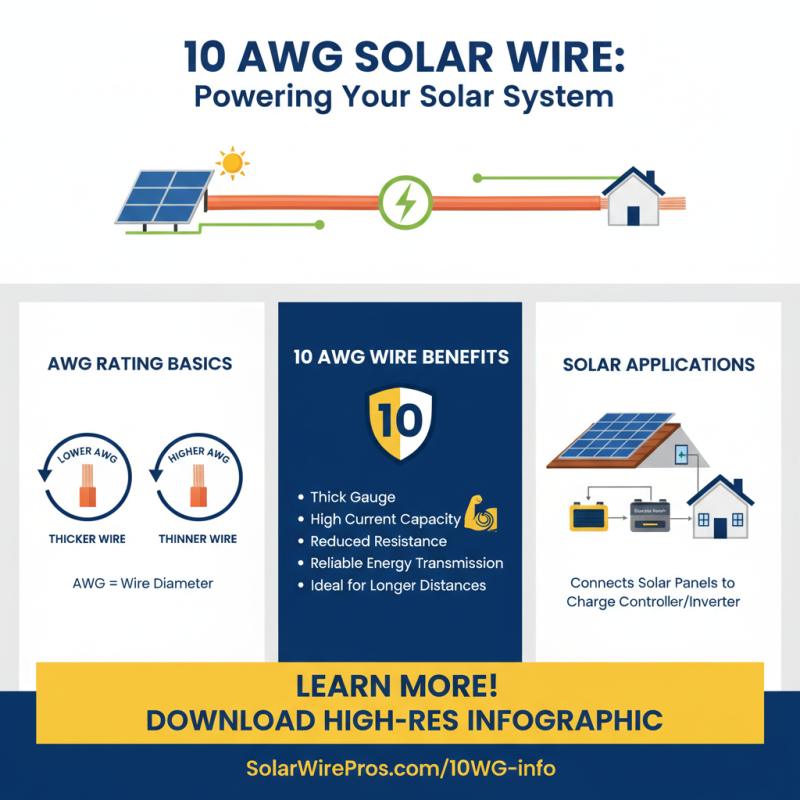
When selecting 10 AWG solar wire for your solar panel installation, understanding the AWG (American Wire Gauge) ratings is crucial. The AWG system measures the diameter of Electrical Wires, and each gauge number corresponds to a specific wire thickness. A lower AWG number indicates a thicker wire, which can handle more current and reduce resistance. In the case of 10 AWG wire, it is capable of carrying a significant amount of current, making it ideal for solar systems that require reliable energy transmission over longer distances.
The importance of correctly choosing the right AWG rating cannot be overstated, as it directly impacts the efficiency and safety of your solar power system. Using a wire that is too thin can lead to overheating, energy loss, and even electrical fires. Therefore, it’s essential to match the wire gauge to the expected current and the length of the run between your panels and the inverter or battery bank. Factors such as ambient temperature and installation method also play a role, as they can affect the wireâs ability to dissipate heat. A firm grasp of AWG ratings will help ensure that your solar installation operates efficiently and safely, maximizing your investment in renewable energy.
Benefits of Using 10 AWG Wire for Solar Panel Installations
When it comes to solar panel installations, choosing the right wire size is crucial for optimal performance and safety. Using 10 AWG solar wire offers several benefits that make it a preferred choice among installers. One of the primary advantages is its ability to handle higher current levels while minimizing voltage drops. This means more efficient energy transfer from your solar panels to the inverter, ultimately leading to better system performance. Additionally, 10 AWG wire is sturdy enough to withstand various environmental conditions, ensuring longevity and reliability in outdoor applications.
When selecting 10 AWG wire, it’s essential to consider factors such as the distance between the solar panels and the inverter, as well as the amperage of the system. A longer distance may require a thicker gauge to prevent energy loss, while a system with higher amperage will benefit from the lower resistance offered by 10 AWG wire.
Tip: Always consult the National Electrical Code (NEC) for guidelines on wire sizing and installation practices to ensure safety and compliance. Moreover, using quality connectors and ensuring proper insulation will help maintain the integrity of the wiring system. Proper planning and installation can lead to enhanced performance and a more efficient solar energy system.
How to Choose 10 AWG Solar Wire for Your Solar Panel Installation – Benefits of Using 10 AWG Wire for Solar Panel Installations
| Feature |
Description |
Benefits |
| Wire Gauge |
10 AWG |
Suitable for medium-range systems |
| Ampacity |
30 Amps |
Can handle considerable current flow |
| Temperature Rating |
90°C (194°F) |
High-temperature tolerance |
| Conductor Material |
Copper |
Excellent conductivity |
| Insulation Type |
UV Resistant, Temperature Rated |
Durability in various conditions |
| Voltage Rating |
600 Volts |
Can be used in most solar applications |
Calculating Current Carrying Capacity for 10 AWG Solar Wire
When selecting 10 AWG solar wire for your solar panel installation, it’s crucial to understand the current carrying capacity, which is influenced by several factors including the wire’s insulation, the ambient temperature, and the installation method. The current capacity (measured in amperes) is essential to ensure the wire can handle the electrical load without overheating or causing a fire hazard. For 10 AWG wire, the maximum current carrying capacity typically ranges around 30 amps, but this can be affected by environmental conditions.
To accurately calculate the current carrying capacity, apply the National Electrical Code (NEC) guidelines, taking into account the temperature rating of the wire insulation. For example, if the solar system operates in a warmer climate, the ampacity may be derated, meaning it cannot carry its maximum rated current without risking damage. Additionally, consider the installation method, such as whether the wire is bundled with others or run through conduit, as these factors can also impact heat dissipation. By carefully calculating these parameters, you can select the appropriate 10 AWG solar wire that meets the specific requirements of your solar panel system, ensuring both safety and efficiency.
Current Carrying Capacity of 10 AWG Solar Wire
const ctx = document.getElementById(‘solarWireChart’).getContext(‘2d’);
const solarWireChart = new Chart(ctx, {
type: ‘bar’,
data: {
labels: [‘Temperature 25°C’, ‘Temperature 30°C’, ‘Temperature 35°C’, ‘Temperature 40°C’, ‘Temperature 45°C’],
datasets: [{
label: ‘Current Carrying Capacity (Amps)’,
data: [30, 28, 25, 22, 20],
backgroundColor: ‘rgba(75, 192, 192, 0.2)’,
borderColor: ‘rgba(75, 192, 192, 1)’,
borderWidth: 1
}]
},
options: {
responsive: true,
scales: {
y: {
beginAtZero: true,
title: {
display: true,
text: ‘Current (Amps)’
}
},
x: {
title: {
display: true,
text: ‘Temperature (°C)’
}
}
}
}
});
Environmental Considerations: Temperature Ratings for Solar Wire
When selecting 10 AWG solar wire for your solar panel installation, understanding temperature ratings is crucial for ensuring optimal performance and longevity. Solar Wires are exposed to varying environmental conditions, and their capacity to operate efficiently at different temperatures is vital. Generally, wires with higher temperature ratings can withstand extreme heat or cold, reducing the likelihood of failures in the system. For instance, a wire rated for temperatures above 90°C provides better performance in hot climates.
**Tips:** Always check the local climate conditions before deciding on the solar wire. If you live in an area with high ambient temperatures, consider choosing wires with better heat resistance to prevent degradation over time. Additionally, for cold climates, ensure that the wire can also handle low-temperature flexibility to avoid cracking.
Moreover, UV resistance is another essential factor that impacts the durability of solar wire. Prolonged exposure to sunlight can lead to insulation breakdown, so selecting wires with high UV protection ratings is advisable. This will not only enhance the lifespan of the installation but also ensure consistent energy production.
**Tips:** Look for solar wire that explicitly mentions UV resistance in its specifications. This is particularly important for outdoor installations directly exposed to sunlight. Proper installation techniques, along with choosing the right wire, will enhance the overall performance of your solar energy system.
Choosing the Right Insulation Type for Solar Panel Wiring
When selecting the right insulation type for 10 AWG solar wire in a solar panel installation, it is essential to consider the environment and conditions under which the wiring will operate. According to a report by the National Renewable Energy Laboratory (NREL), solar installations often face exposure to varying climates, which can lead to different insulation performance requirements. For instance, high temperatures can accelerate thermal degradation in common insulation materials, affecting their longevity and efficiency.
Thermoplastic Elastomer (TPE) and polyvinyl chloride (PVC) are two popular insulation choices for solar wiring. TPE, known for its flexibility and resistance to extreme temperatures, is suitable for installations in regions with fluctuating weather patterns. A comparative analysis conducted by the Solar Energy Industries Association (SEIA) indicates that wires insulated with TPE can withstand temperature ranges from -40°C to 90°C, making it advantageous for both hot and cold environments. Conversely, PVC insulation, while cost-effective and durable, is less resilient in extreme temperatures, affecting its overall performance in harsh conditions.
Moreover, UV resistance is another crucial factor to consider, as prolonged sunlight exposure can lead to insulation deterioration. The American Society for Testing and Materials (ASTM) specifies that solar wire insulation should meet stringent UV resistance standards to ensure reliability over time. Wires with proper UV-resistant insulation significantly reduce the risk of failure and enhance the overall safety of the solar energy system, which is paramount in the growing field of renewable energy installations.
Installation Guidelines and Best Practices for 10 AWG Solar Wire
When installing a solar panel system, selecting the appropriate 10 AWG solar wire is crucial for ensuring efficient power transmission and safety. This wire gauge is ideal for handling the electrical loads typical in solar setups, providing a robust connection between the solar panels and the inverter. When planning your installation, itâs important to account for the distance between your panels and the inverter, as voltage drop can significantly impact system performance. Generally, keep runs as short as possible and ensure all connections are tight and secure to minimize resistance.
Installation guidelines for 10 AWG solar wire include adhering to proper routing practices. Ensure that wires are protected from physical damage by using conduits or protective sheathing, especially in areas exposed to environmental elements. Additionally, itâs essential to follow local electrical codes and regulations, which might dictate specific installation practices.
Utilizing waterproof connectors and ensuring that all wire joints are well-sealed will help prevent moisture ingress, reducing the risk of corrosion. Regular inspections after installation are also recommended to ensure that the wires remain intact and that connections are secure. By following these best practices, you can maximize the efficiency and longevity of your solar panel system.
Maintaining Safety and Compliance with Electrical Codes in Solar Installations
When installing a solar panel system, ensuring safety and compliance with electrical codes is paramount. One crucial factor that often gets overlooked is the choice of wire, particularly when selecting 10 AWG solar wire. According to the National Electrical Code (NEC), using the correct wire gauge is essential for minimizing the risk of overheating and electrical faults, especially under varying environmental conditions. The NEC recommends specific wire sizes based on the current load and the distance the electricity must travel, emphasizing that using wires rated for higher temperatures can enhance safety and efficiency.
Moreover, various industry reports highlight the significance of using UV-resistant and corrosion-resistant materials in solar installations. The Solar Energy Industries Association (SEIA) indicates that improper wire selection can lead to significant failures, affecting not just the safety of the installation but also its long-term functionality. For instance, a study by the National Renewable Energy Laboratory (NREL) revealed that employing appropriate wire types and gauges could reduce installation costs by up to 20% through increased reliability and reduced failure rates. Therefore, adhering to electrical codes and utilizing suitable 10 AWG solar wire is not just a matter of compliance but a critical decision that can influence the overall success of a solar panel installation.
FAQS
: When selecting insulation for solar panel wiring, important factors include the operating environment, temperature fluctuations, UV resistance, and compliance with electrical codes.
TPE is flexible and resistant to extreme temperatures, making it suitable for regions with varying weather conditions. It can withstand temperature ranges from -40°C to 90°C.
While PVC insulation is cost-effective and durable, it is less resilient in extreme temperatures than TPE, potentially affecting performance in harsh conditions.
UV resistance is crucial as prolonged exposure to sunlight can degrade insulation quality. Proper UV-resistant insulation helps to prevent failures and ensures the safety of the solar energy system.
The NEC recommends using the correct wire gauge based on the current load and distance electricity travels, stressing the importance of higher-rated wires to minimize overheating risks.
Improper wire selection can lead to significant system failures, safety hazards, and increased long-term costs due to inefficiencies and higher failure rates.
Using appropriate wire types and gauges can reduce installation costs by up to 20% through enhanced reliability and decreased failure rates.
To ensure compliance, one should adhere to the recommended wire sizes, select suitable materials, and follow safety standards as outlined in electrical codes.
Temperature affects the thermal degradation of insulation materials, emphasizing the need for insulation that can perform reliably under the expected temperature ranges in a particular installation location.
Higher temperature-rated wires enhance safety by minimizing the risk of overheating and electrical faults, ensuring the system operates efficiently under various environmental conditions.
Conclusion
Choosing the right 10 AWG solar wire is crucial for a successful solar panel installation. Understanding AWG ratings is essential, as they determine the wire’s capacity to carry current safely. The benefits of using 10 AWG wire include its optimal balance of conductivity and flexibility, making it suitable for various installations. It’s important to calculate the current-carrying capacity to prevent overheating and ensure efficiency.
Environmental factors, such as temperature ratings, also play a significant role in selecting solar wire. Additionally, choosing the right insulation type is vital for protecting the wire from environmental elements. Following installation guidelines and best practices ensures safety and compliance with electrical codes, ultimately contributing to a reliable solar energy system. Proper maintenance and adherence to these standards will enhance the longevity and effectiveness of your solar panel setup.