


What Should EPC Contractors Consider When Buying Solar Cable?
The solar industry is entering a new stage of growth.
Solar PV is becoming an increasingly important part of the global electricity system, while energy storage, electric vehicles, data centers, artificial intelligence, and industrial electrification are creating new demand for electricity.
As solar projects continue to expand in scale, Solar Cable procurement is also becoming more important. For an EPC contractor, choosing a solar cable is no longer simply about finding the lowest price per meter. It is about balancingcost, electrical performance, durability, certification, supply capacity, and long-term project reliability.
So, what should EPC contractors consider when buying solar cable—and how could the future of the energy industry change the way they make procurement decisions?
The Future of Solar Is Also the Future of Solar Cable
The growth of solar energy is closely connected to broader changes in the global energy system.
The expansion of AI and data centers is increasing electricity demand. At the same time, electric vehicles and industrial electrification are shifting more energy consumption toward electricity. Energy storage is also becoming increasingly important for integrating renewable power into electricity systems.
These trends are creating a larger and more complex market for renewable energy infrastructure.
As solar projects become larger and more technically demanding, the amount of cable required can reach hundreds of thousands or even millions of meters. This makes cable procurement an increasingly important part of project cost management.
At the same time, material prices—particularly copper—can have a significant impact on cable costs.
For EPC contractors, this raises an important question:
How can solar cable costs be optimized without compromising system reliability?
The answer starts with understanding the key factors behind solar cable selection.
1. Start With the PV System Requirements
The first step in solar cable procurement is to match the cable with the actual requirements of the PV system.
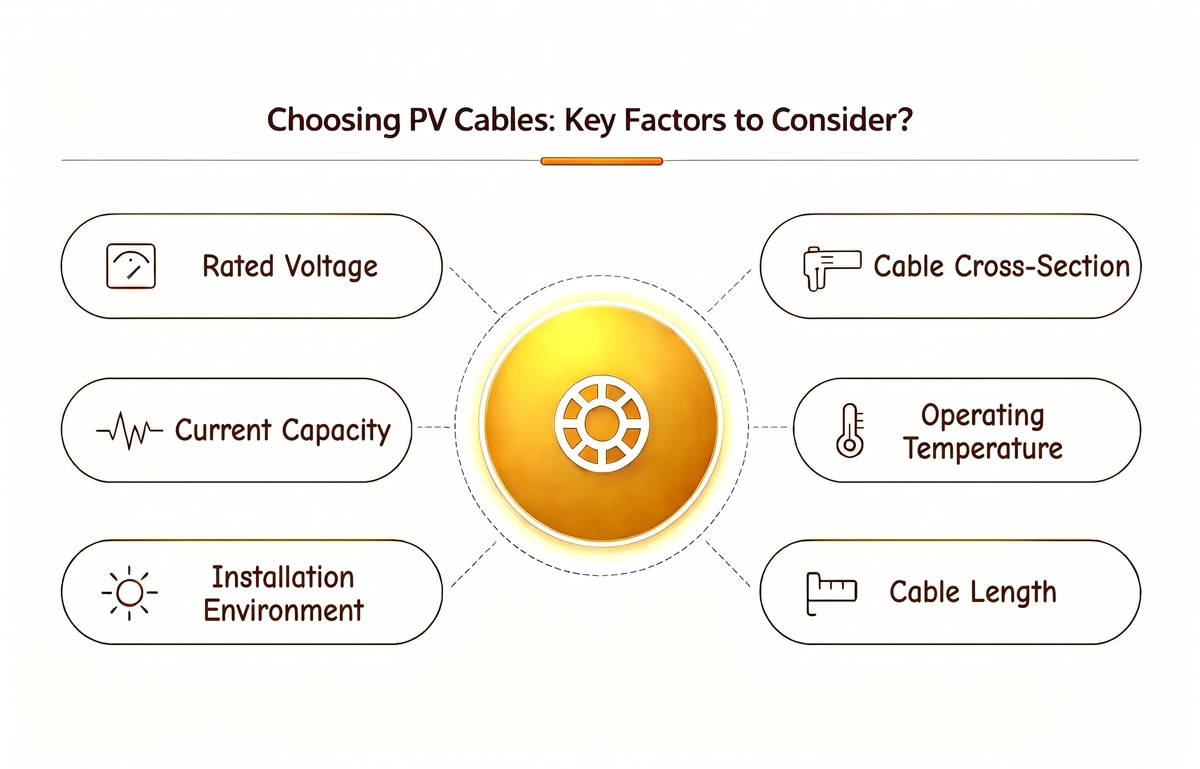
EPC contractors should consider the rated voltage, cable cross-section, current-carrying capacity, operating temperature, installation environment, and required cable length.
For example, a 1500V PV system requires a solar cable designed for high-voltage DC applications. Cable size should also be selected according to the system current, installation conditions, voltage drop requirements, and applicable standards.
Choosing the correct specification helps avoid unnecessary material costs while maintaining reliable electrical performance.
The objective is not to select the largest or most expensive cable, but to select the right solar cable for the specific PV application.
2. Look Beyond Traditional Conductor Choices
The conductor is one of the most important components of a solar cable because it directly affects electrical performance, weight, and material cost.
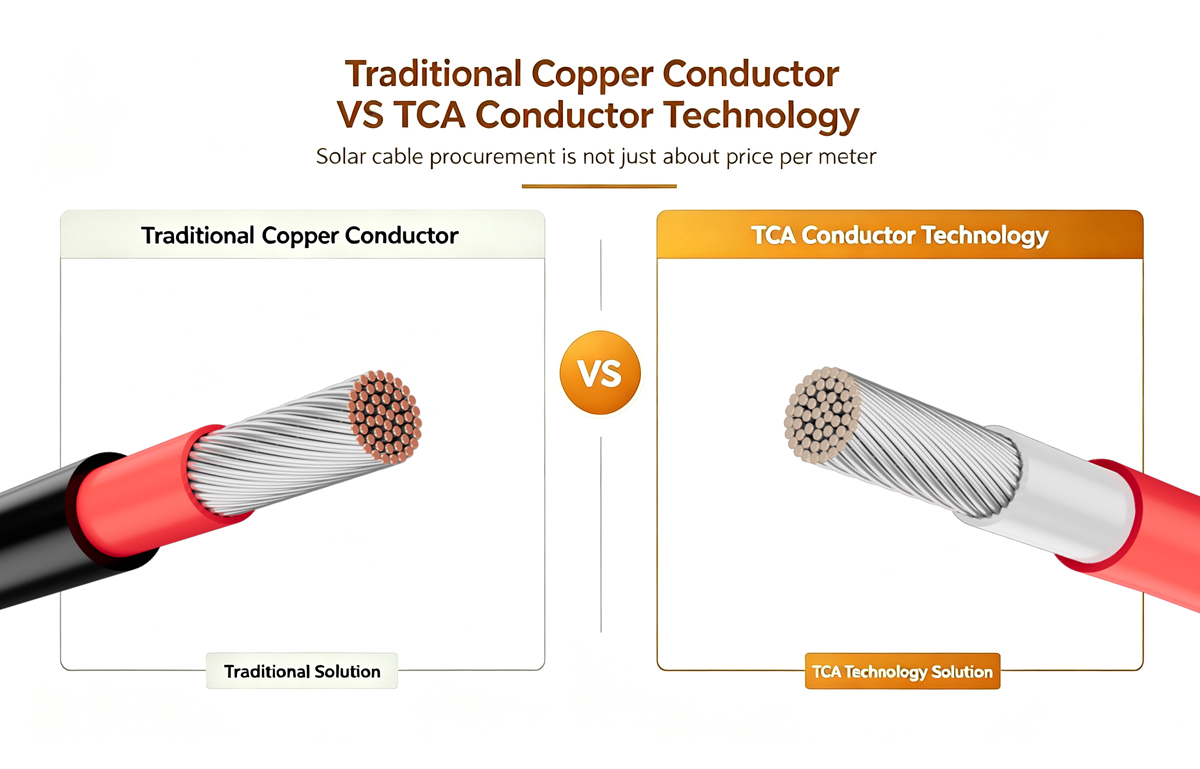
Copper has traditionally been widely used in Pv Cables because of its excellent conductivity and established application history. However, as solar projects become larger and material costs become increasingly important, EPC contractors are paying more attention to alternative conductor technologies.
When evaluating a solar cable, buyers should consider electrical resistance, conductor construction, weight, mechanical performance, material cost, and long-term reliability together.
For suitable PV applications, technologies such as TCA conductor solutions can provide another option for balancing performance and project cost.
This is particularly relevant for large projects where hundreds of thousands of meters of cable may be required.
The key question is therefore not simply: “Which conductor is cheaper?”It should be: “Which conductor and cable construction provide the best overall value for this project?”
3. Copper Prices Make Cost Optimization More Important
Copper is an important raw material for electrical infrastructure, and fluctuations in copper prices can directly affect cable manufacturing costs.
For a small project, a change of a few cents per meter may appear insignificant.
For a utility-scale solar project requiring hundreds of thousands of meters of cable, however, the impact can become substantial.
This is why future solar cable procurement is likely to focus more heavily on cost optimization and material efficiency.
EPC contractors should not evaluate cable cost based only on the quoted price per meter. A more complete calculation should consider:
Cable Price + Transportation + Installation + Quality Risk + Replacement Risk
Cable weight, reel length, packaging efficiency, transportation volume, installation efficiency, and expected service life can all influence the actual project cost.
In other words: The lowest cable price does not always mean the lowest project cost.
4. Consider Long-Term Cable Protection
Solar cables are expected to operate outdoors for many years, often under demanding environmental conditions.
A suitable solar cable should provide reliable protection against UV radiation, high temperatures, temperature fluctuations, moisture, mechanical stress, and outdoor aging.
The quality of the insulation and outer sheath is therefore critical.
For projects in regions with high temperatures, strong sunlight, high humidity, or harsh installation conditions, reinforced cable construction can provide additional protection and help maintain long-term performance.
EPC contractors should evaluate the complete cable construction rather than focusing only on the conductor.
5. Verify Certification—Not Just the Logo
Certification is an important part of solar cable procurement, particularly for international EPC projects.
Depending on the target market and project requirements, buyers may require standards or certifications such as TÜV, EN 50618, UL 4703, CE, IEC, VDE, CQC, RoHS, and REACH.
However, simply seeing a certification logo on a supplier’s website is not enough.
EPC contractors should confirm whether the certification applies to the specific cable model, conductor construction, cable size, and manufacturing location being purchased.
They should also check whether the supplied cable marking and technical documentation correspond with the certified product.
For large PV projects, correct certification documentation can be just as important as the physical cable itself.
6. Quality Consistency Becomes Critical at Large Scale
The larger the project, the more important manufacturing consistency becomes.
A supplier should be able to maintain stable conductor resistance, insulation thickness, sheath thickness, cable diameter, mechanical performance, and electrical performance across large production batches.
This requires more than a final inspection.It depends on consistent raw materials, controlled production processes, professional testing equipment, and an effective quality-control system.
For EPC contractors, a manufacturer’s ability to maintain consistent quality across hundreds of thousands of meters of cable can significantly reduce installation, inspection, and project acceptance risks.
7. Manufacturing Capacity Is Part of Supplier Reliability
A large solar project may require a significant quantity of cable within a relatively short construction schedule.
This means EPC contractors should evaluate not only the product itself, but also the manufacturer’s ability to produce and deliver it.
Production capacity, PV cable production lines, irradiation equipment, testing facilities, raw material management, quality control, and shipping capability should all be considered during supplier evaluation.
A supplier may offer an attractive cable price, but if production cannot keep up with the project schedule, delays can increase the actual cost of the project.
For large-scale PV projects, manufacturing capacity is part of reliability.
8. Supplier Experience Matters
International solar projects often involve more than simply supplying cable.
EPC contractors may require technical documentation, certificates, inspection support, customized specifications, packaging requirements, export documentation, and coordinated delivery schedules.
A supplier with experience in international PV projects is more likely to understand these requirements and respond efficiently.
When evaluating a solar cable manufacturer, EPC contractors should consider its experience with utility-scale PV projects, high-voltage systems, large-volume orders, international certifications, export logistics, and customized cable requirements.
9. Technical Support Should Continue After Delivery
Solar cable procurement does not end when the shipment leaves the factory.
During installation and project acceptance, EPC contractors may need technical datasheets, test reports, certificates, inspection documents, installation information, or product traceability.
Fast technical support can help reduce communication delays and solve problems before they affect the project schedule.For long-term cooperation, the ability to provide technical and after-sales support can be just as important as the initial cable quotation.
10. What Will Solar Cable Procurement Look Like in the Future?
The solar cable industry is likely to face several major changes over the coming years.
Larger Solar Projects
As renewable energy deployment continues to grow, utility-scale PV projects are becoming increasingly important. Larger projects mean greater cable consumption and greater pressure to optimize procurement costs.
Higher Electricity Demand
AI, data centers, electric vehicles, energy storage, and industrial electrification are contributing to a more electricity-intensive economy.
More electricity demand means more investment in generation and electrical infrastructure, creating further opportunities for solar power.
Greater Cost Pressure
Material prices, logistics costs, labor costs, and project financing pressures will continue to influence solar project economics.
EPC contractors will therefore have stronger incentives to find cable solutions that reduce total project costs without sacrificing reliability.
More Focus on Cable Innovation
As the solar industry matures, cable manufacturers will increasingly need to improve conductor technology, protection, manufacturing efficiency, and material utilization.
The future of solar cable is therefore unlikely to be determined by one factor alone.It will be shaped by the balance between: Performance + Reliability + Certification + Manufacturing + Cost
Solar Cable Procurement Checklist for EPC Contractors.Before selecting a solar cable supplier, EPC contractors should evaluate the following:
|
Item |
What to Check |
|
Specification |
Voltage, cross-section, current and application |
|
Conductor |
Material, resistance, construction and weight |
|
Protection |
Insulation, sheath and outdoor durability |
|
Certification |
TÜV, EN 50618, UL 4703 and other project requirements |
|
Quality |
Production consistency and testing |
|
Manufacturing |
Production capacity and quality-control system |
|
Quality |
Production consistency and testing |
|
Manufacturing |
Production capacity and quality-control system |
|
Cost |
Total project cost, not only price per meter |
|
Experience |
International and utility-scale PV project experience |
|
Delivery |
Production and shipping schedule |
|
Support |
Technical documents and after-sales service |
Why Choose VAZPO TCA Solar Cable?
As the solar industry moves toward larger projects and greater cost efficiency, EPC contractors need cable solutions that provide a practical balance between performance, reliability, and cost.
VAZPO TCA Solar Cable is developed with this principle in mind.
Proven Large-Scale Project Experience
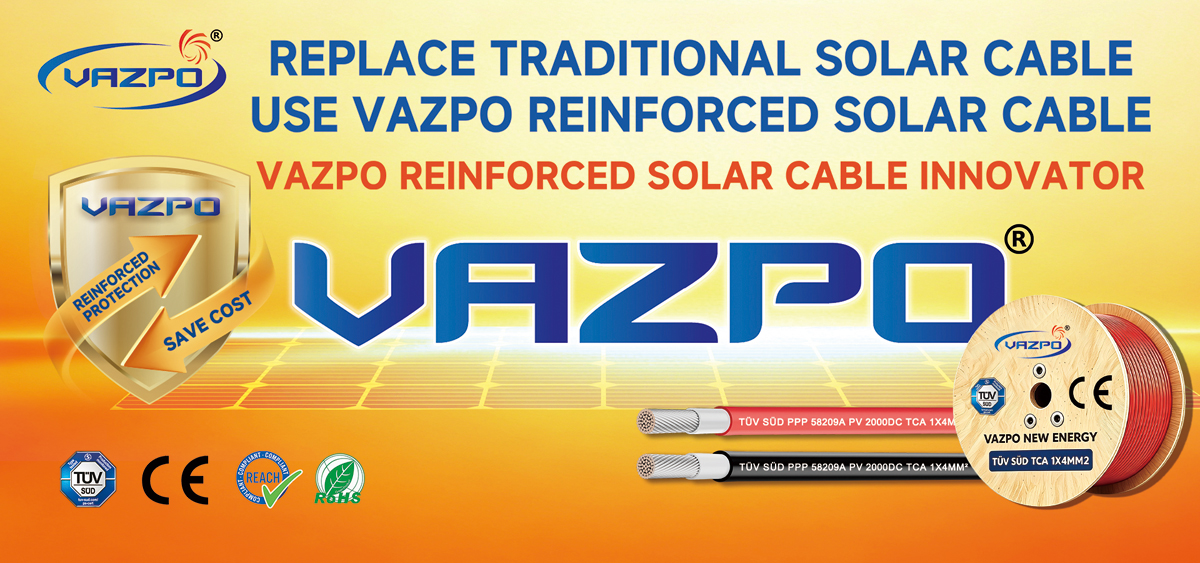
VAZPO supplied approximately 700,000 meters of solar cable for a 70MW PV project, helping the project save around $120,000 in cable costs.
4-Level Protection
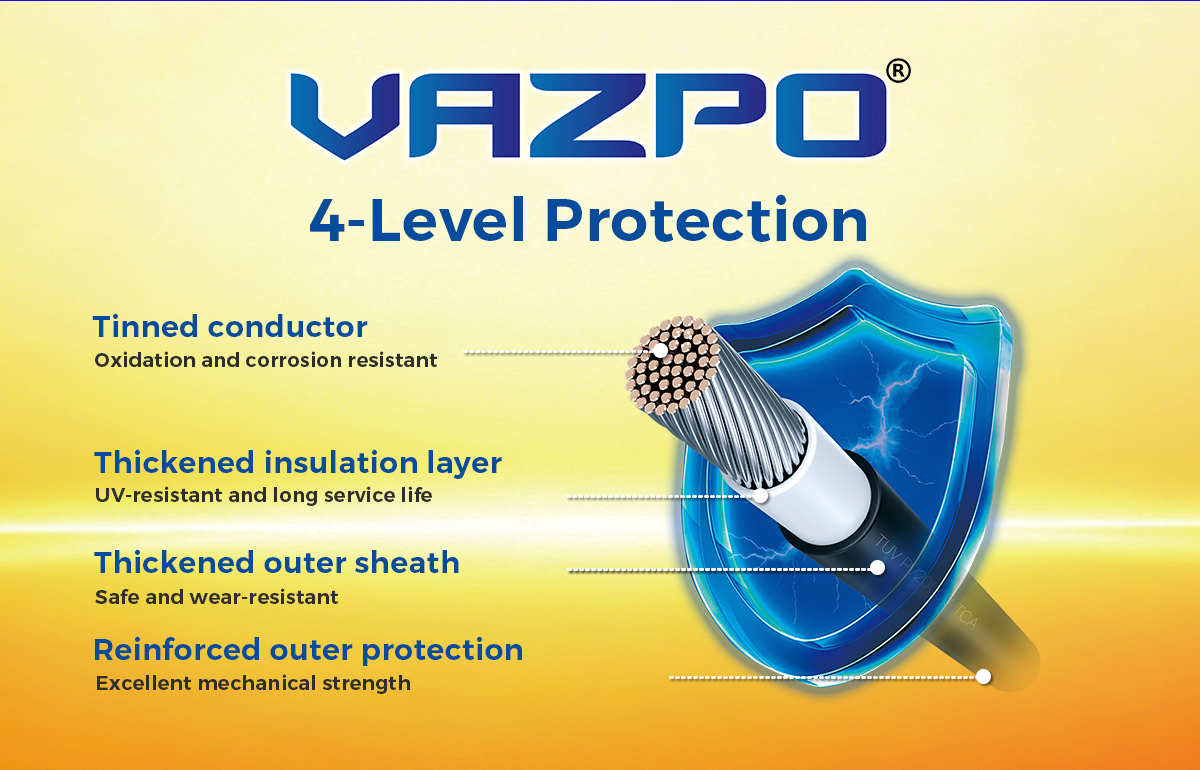
VAZPO reinforced solar cable features four layers of protection:
Tinned conductor + reinforced insulation + reinforced sheath + enhanced outer protection
This construction is designed to provide additional protection for demanding outdoor PV applications.
Fully Certificated
Depending on the product, VAZPO solar cables can meet requirements including TÜV, CE, RoHS and REACH.
Strong Manufacturing Capability
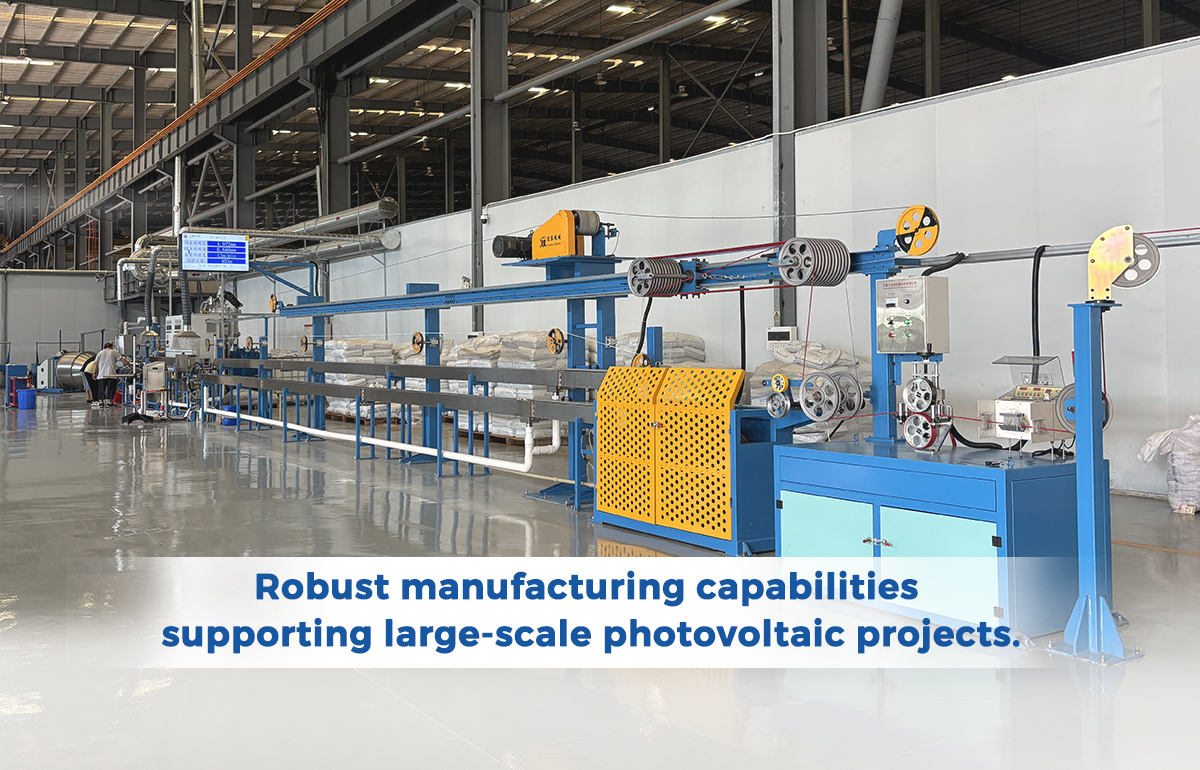
VAZPO operates 3 production bases with dedicated PV cable production lines, irradiation equipment, and testing facilities to support large-volume orders and international solar projects…
Save Cost
With material costs becoming an increasingly important factor in large-scale PV projects, TCA technology provides an alternative solution for suitable applications.
The goal is not simply to reduce the cable price.
It is to help EPC contractors achieve a better balance between:
Cost + Performance + Reliability + Project Requirements
Conclusion: The Future of Solar Cable Is About More Than Price
The global energy landscape is changing.
AI and data centers are increasing electricity demand. Electric vehicles are accelerating transportation electrification. Energy storage is enabling greater integration of renewable energy. Solar PV is becoming an increasingly important source of new electricity generation.
Behind every large solar project is a network of electrical infrastructure—and solar cable is one of its essential components.
For EPC contractors, future solar cable procurement will increasingly move from “buying cable” to “optimizing the complete cable solution.”
The most competitive suppliers will not simply offer the lowest price.They will provide:Reliable products + consistent quality + verified certifications + strong manufacturing capacity + cost-optimized solutions.
VAZPO — Vazpo Reinforced Solar Cable Innovator
Replace Traditional Solar Cable, Use VAZPO Reinforced Solar Cable.
Looking for a reliable solar cable supplier for your next PV project?
Contact VAZPO for a customized solar cable solution and quotation.